
Bloom & Build Home School
Schooling at Home in Oklahoma
Helping Oklahoma families grow confidence, build strong foundations, and create a homeschool experience that works for their family.
Whether you are just considering homeschooling, pulling a child from traditional school, supporting a child who learns differently, or looking for new resources after years of teaching at home, Bloom & Build Home School is here to help you find your next step.

The Experience of Schooling at Home
Schooling at home with my children has taught me that education is not one-size-fits-all. Each of my children has learned differently, needed different levels of support, and grown in their own time. Over the years, I have learned to adjust curriculum, change approaches, follow their interests, advocate for their needs, and recognize that meaningful learning often happens far beyond a worksheet or textbook. Some seasons have been beautiful, others have been frustrating, and many have required me to learn right alongside them. I did not begin homeschooling because I had all the answers.
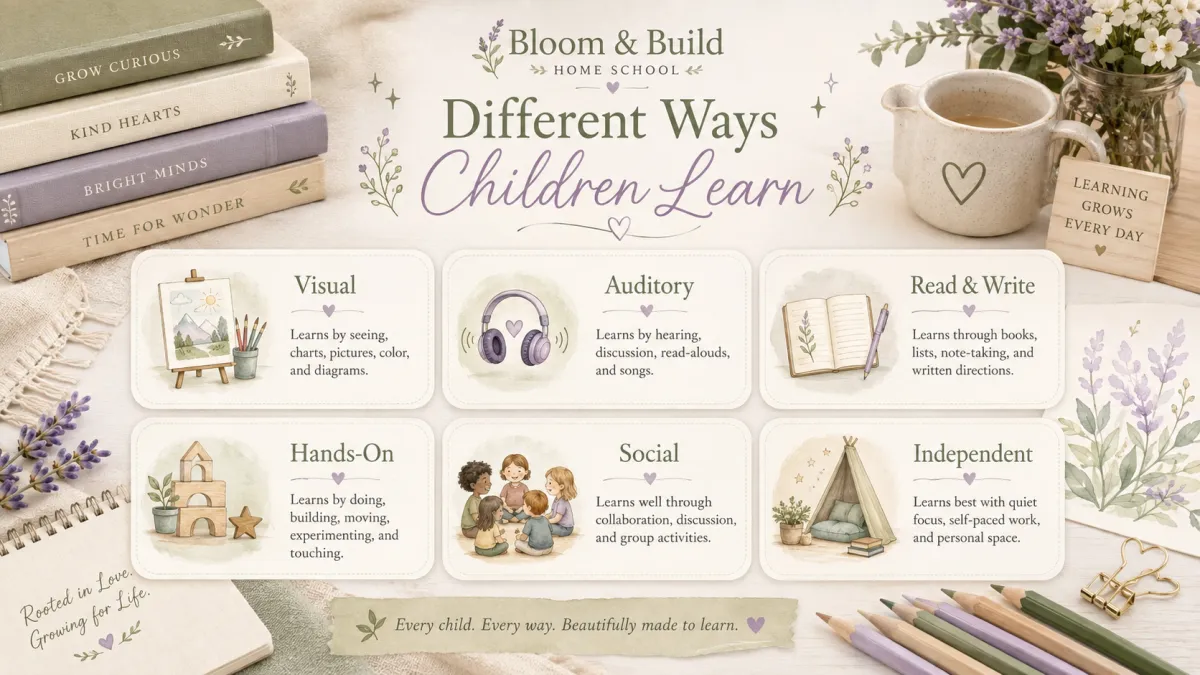
Every child learns differently. Some children understand a new idea best when they can see it, others need to hear it explained, some want to read about it and write it down, and others do not fully understand it until they can touch, build, move, or experience it for themselves. In homeschooling, one of the greatest advantages we have is the ability to notice those differences and adjust the way we teach.
You may hear these differences described as learning styles, such as visual, auditory, read/write, and kinesthetic learning. It is helpful to think of these as learning preferences rather than permanent labels. A child is rarely only one type of learner. In fact, most children benefit from using several methods together. The goal is not to decide that a child is “a visual learner” and only teach visually. The goal is to discover which approaches help that child understand, remember, stay engaged, and become more confident.
Why This Matters
A child who does not understand a lesson is not necessarily incapable of learning the material. Sometimes the teaching method simply has not connected with the way that child is processing the information.
Imagine explaining a math concept verbally several times and watching a child become increasingly frustrated. It can be easy to assume the child is not paying attention or does not understand math. Then you place counters on the table, allow the child to physically move them around, and suddenly the concept makes sense.
The information did not change.
The child did not suddenly become smarter.
The way the information was presented changed.
That distinction can completely change a child's educational experience.
When children repeatedly struggle with material presented in only one format, they may begin to believe they are “bad at school,” “not smart,” or incapable of learning. When we offer another path to understanding, we give them an opportunity to experience success.
Success builds confidence, and confidence often makes children more willing to try difficult things.
Homeschooling Gives Us the Freedom to Adjust
One of the beautiful things about homeschooling is that we do not have to recreate a traditional classroom at the kitchen table.
If reading a chapter is not working, we can listen to an audiobook.
If a worksheet is creating frustration, we can turn the lesson into a game.
If sitting still makes concentrating difficult, we can practice spelling words while bouncing a ball.
If a child loves animals, we can use animals to explore science, geography, writing, math, and even history.
If a child needs more time with a concept, we can slow down.
If they understand it quickly, we can move forward.
The curriculum is a tool. It does not have to control the education.
Teach the Child in Front of You
Perhaps the most useful question a homeschool parent can ask is not, “What learning style is my child?”
Instead, ask:
“What helps my child understand this?”
Pay attention to the moments when your child becomes curious. Notice what they remember without being reminded. Watch what happens immediately before frustration begins. Ask them what helps something make sense.
Then experiment.
Draw it.
Say it.
Read it.
Write it.
Build it.
Act it out.
Go somewhere and experience it.
Use several methods together.
Children grow, and the way they learn can change with age, subject, maturity, and circumstance. A child who needs hands-on math today may become an independent textbook learner later. Another child may love reading history but need experiments to understand science.
We do not have to fit children into educational boxes.
We can build education around the children we have.
That is one of the greatest opportunities homeschooling gives us: the freedom to stop asking a child to learn exactly the way everyone else does and begin discovering the methods that help that individual child understand, grow, and bloom.
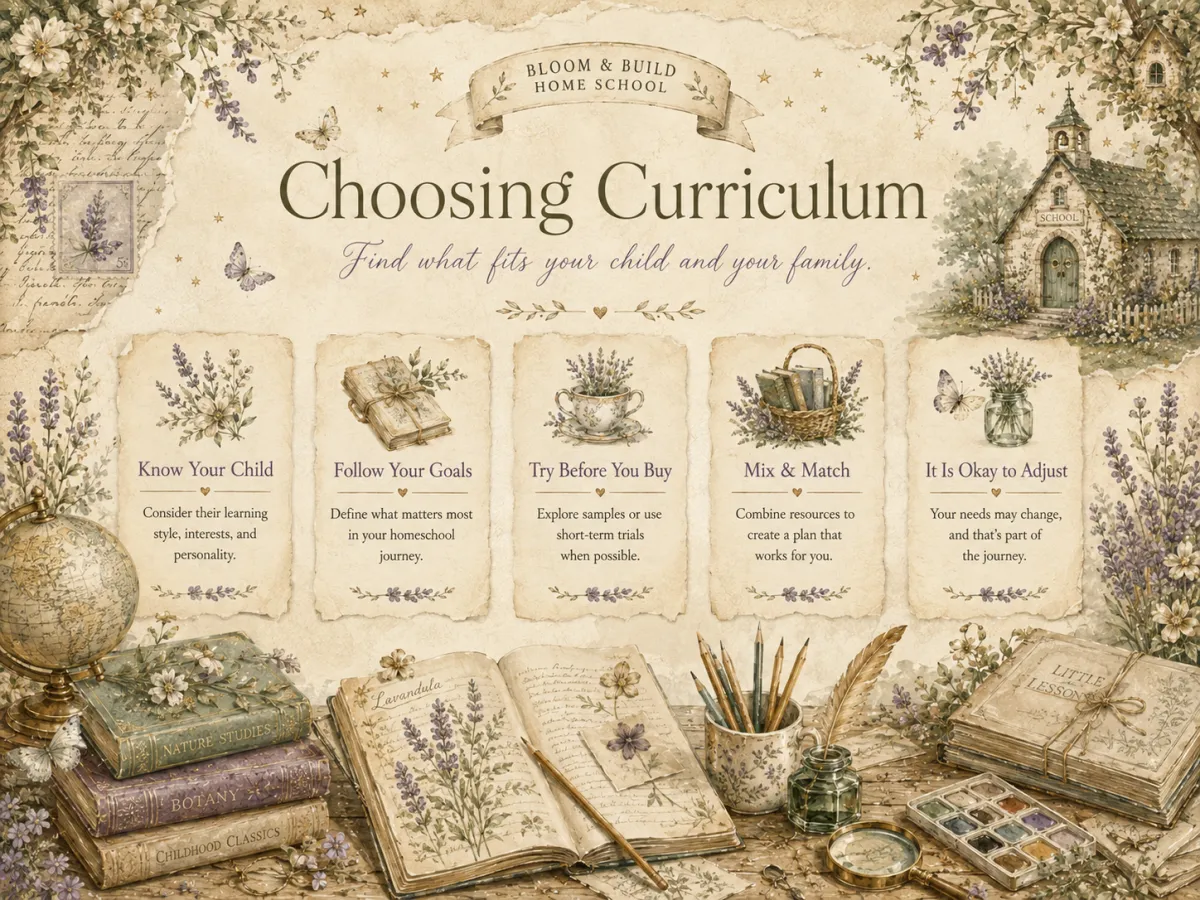
Some Examples of Curriculum you could choose from.
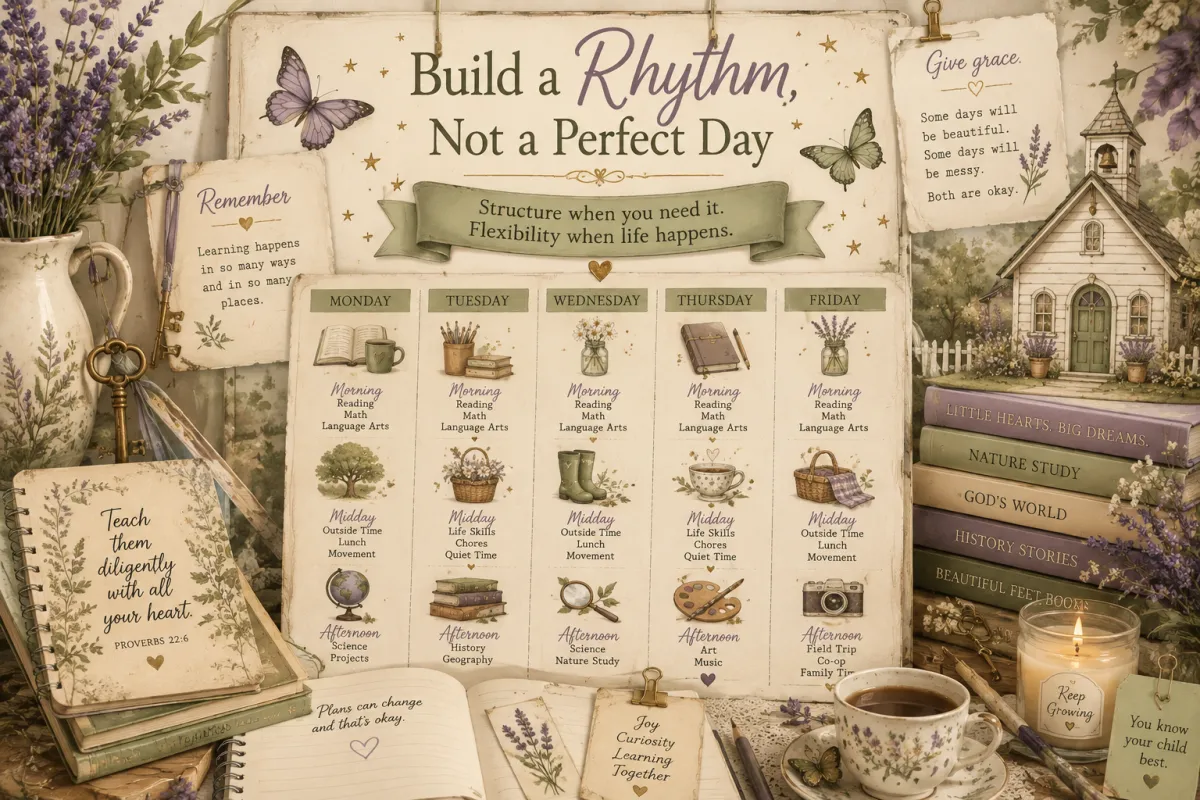
Your homeschool schedule should change as your children grow.
What worked for a six-year-old may not work for a twelve-year-old. A schedule that worked beautifully last semester may suddenly become frustrating.
Homeschooling Beyond the Books: Real-Life Learning
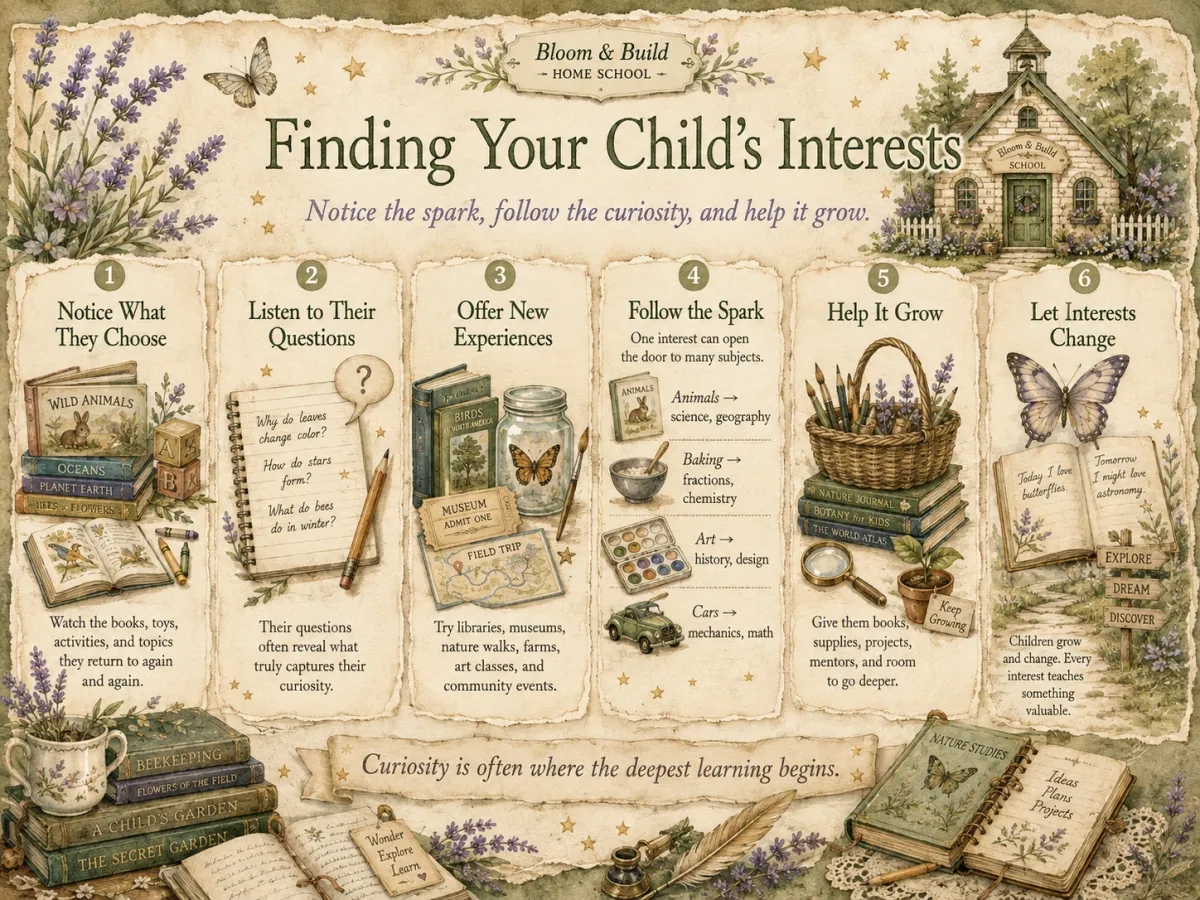
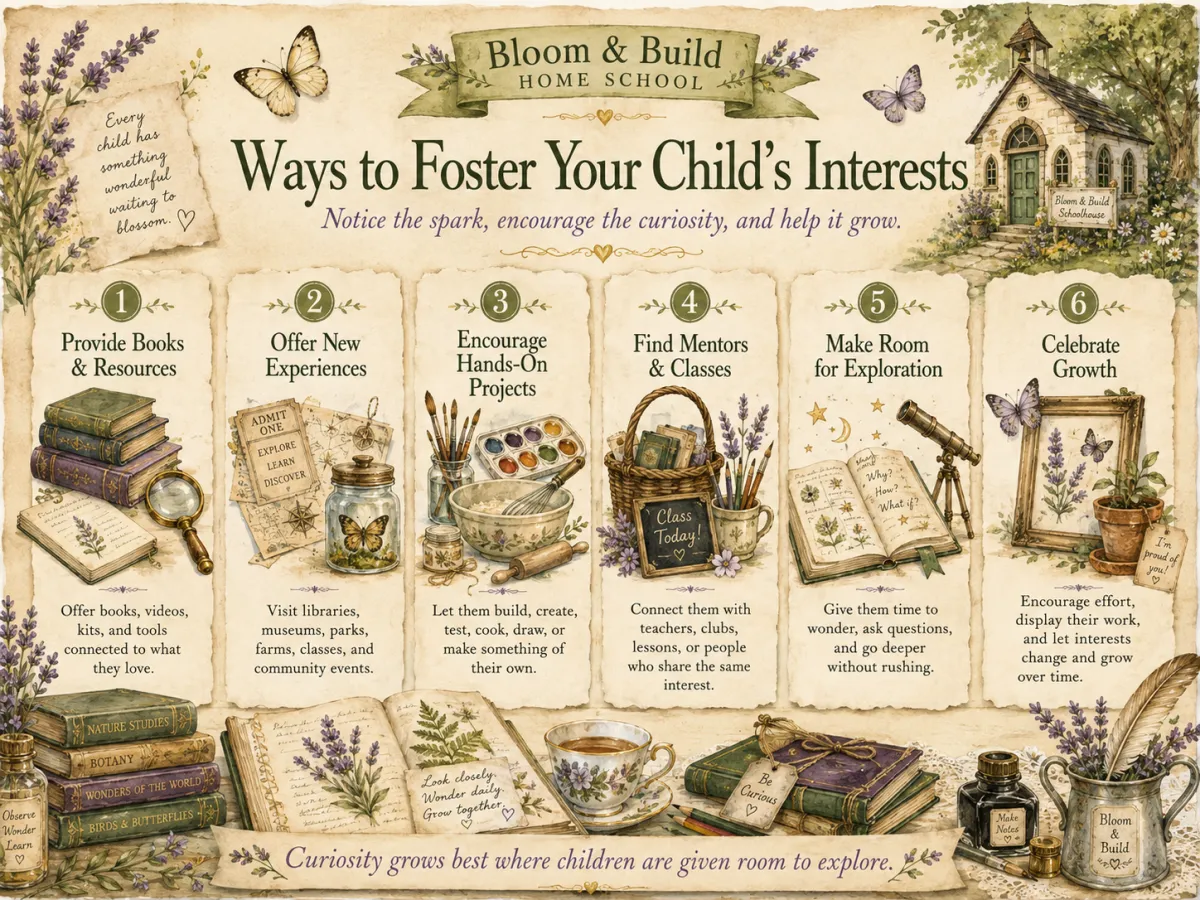
Follow the Curiosity
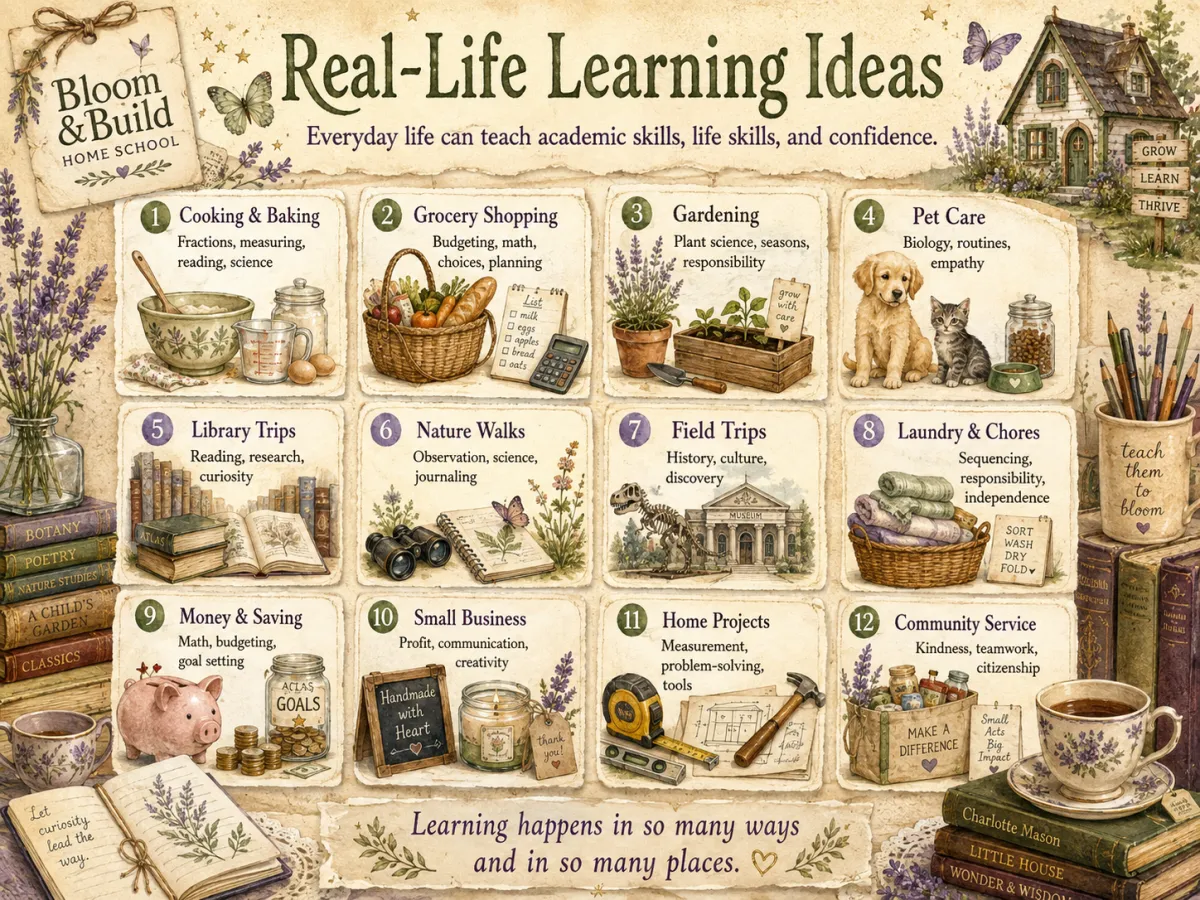
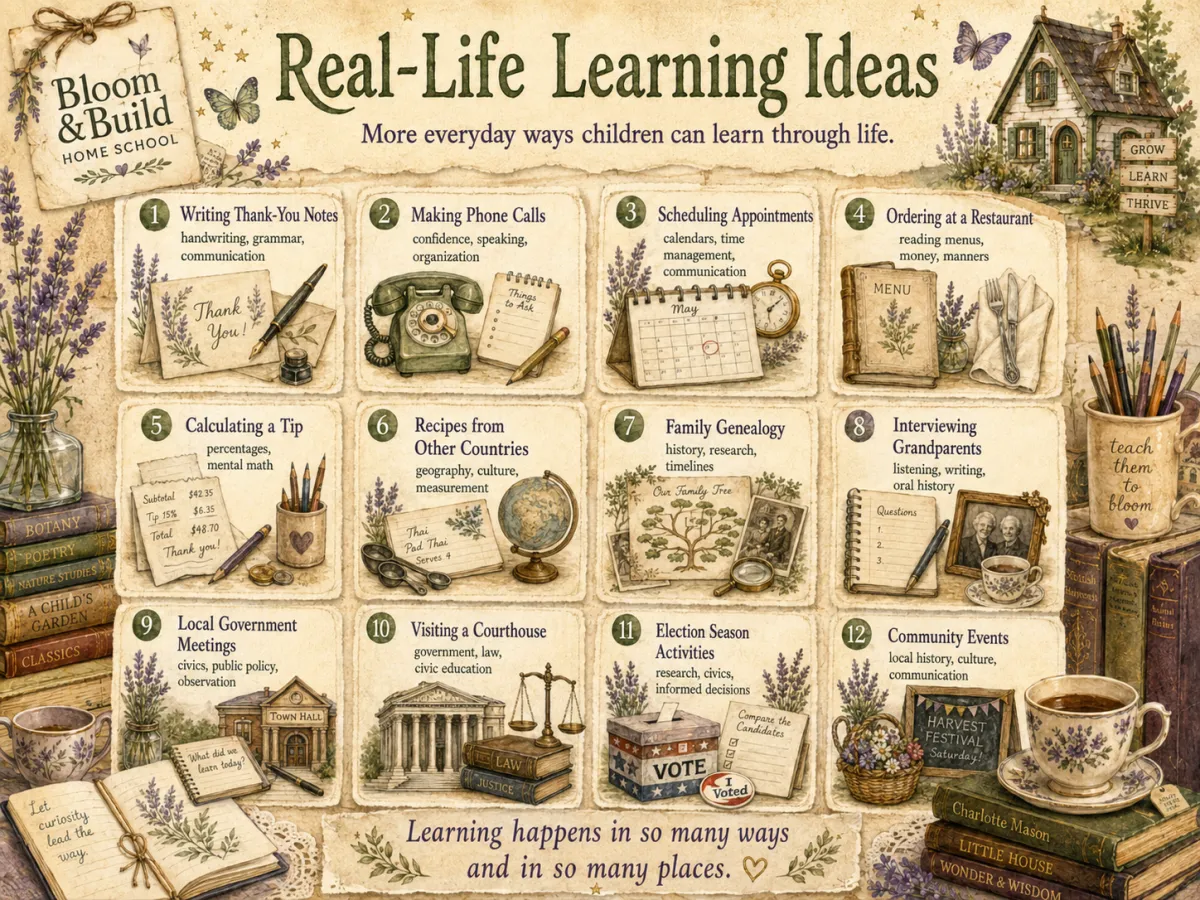
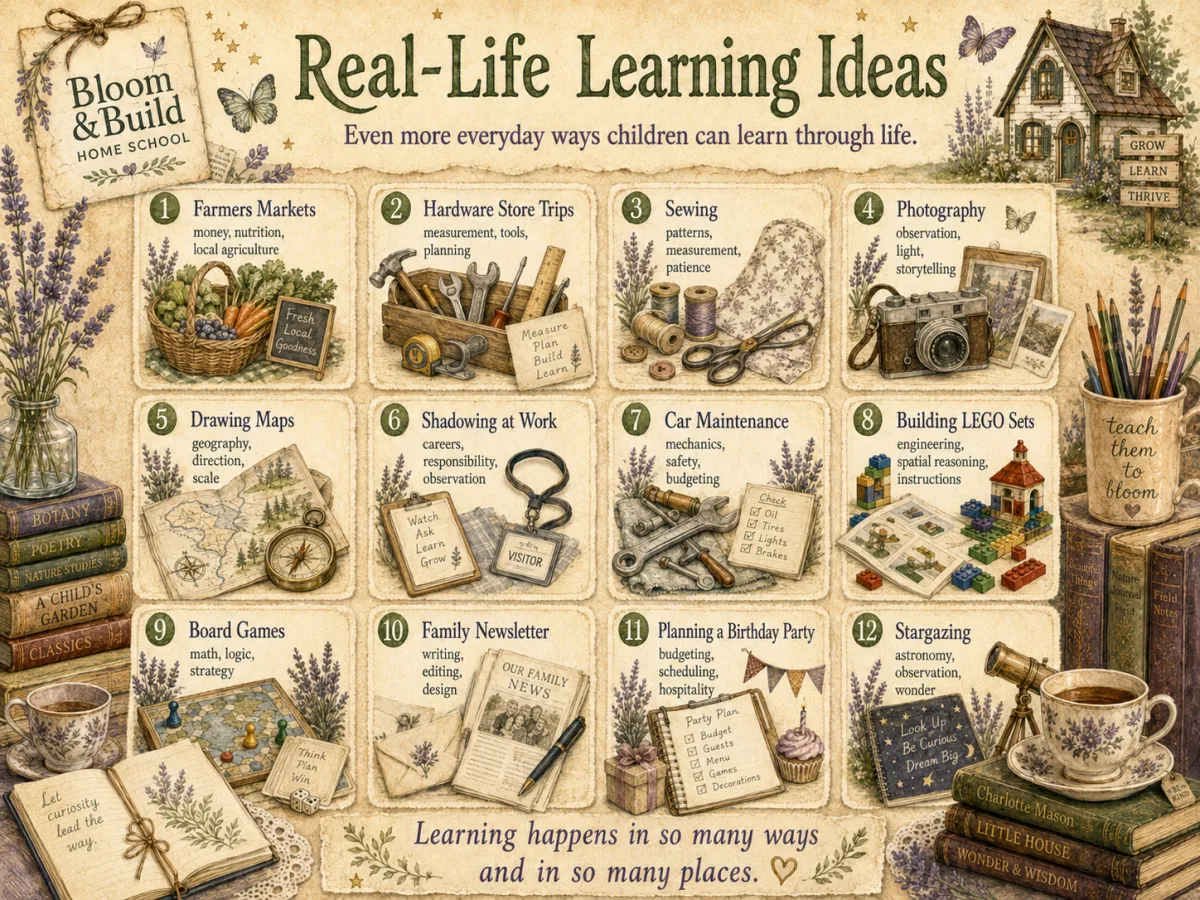
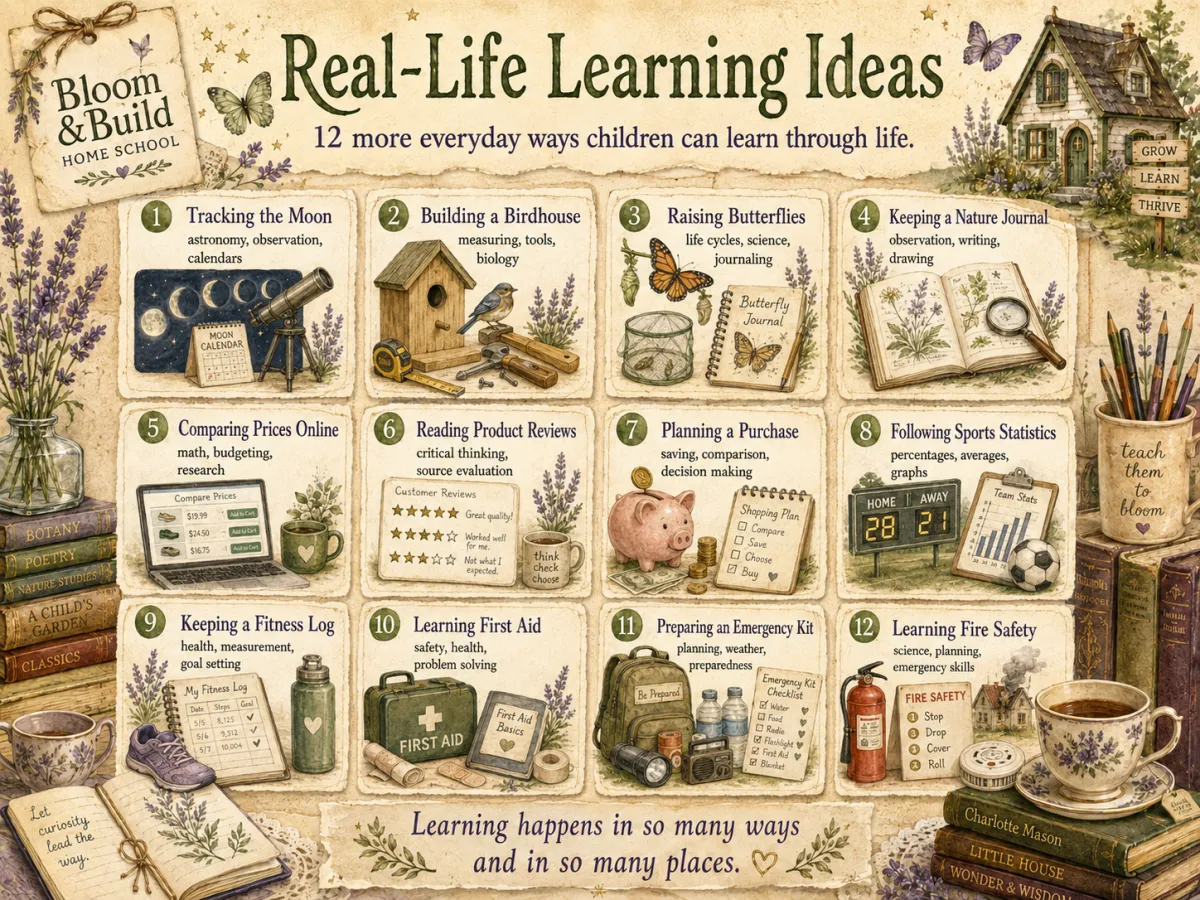
Finding Your Child’s Interests, Following Them, and Helping Them Grow
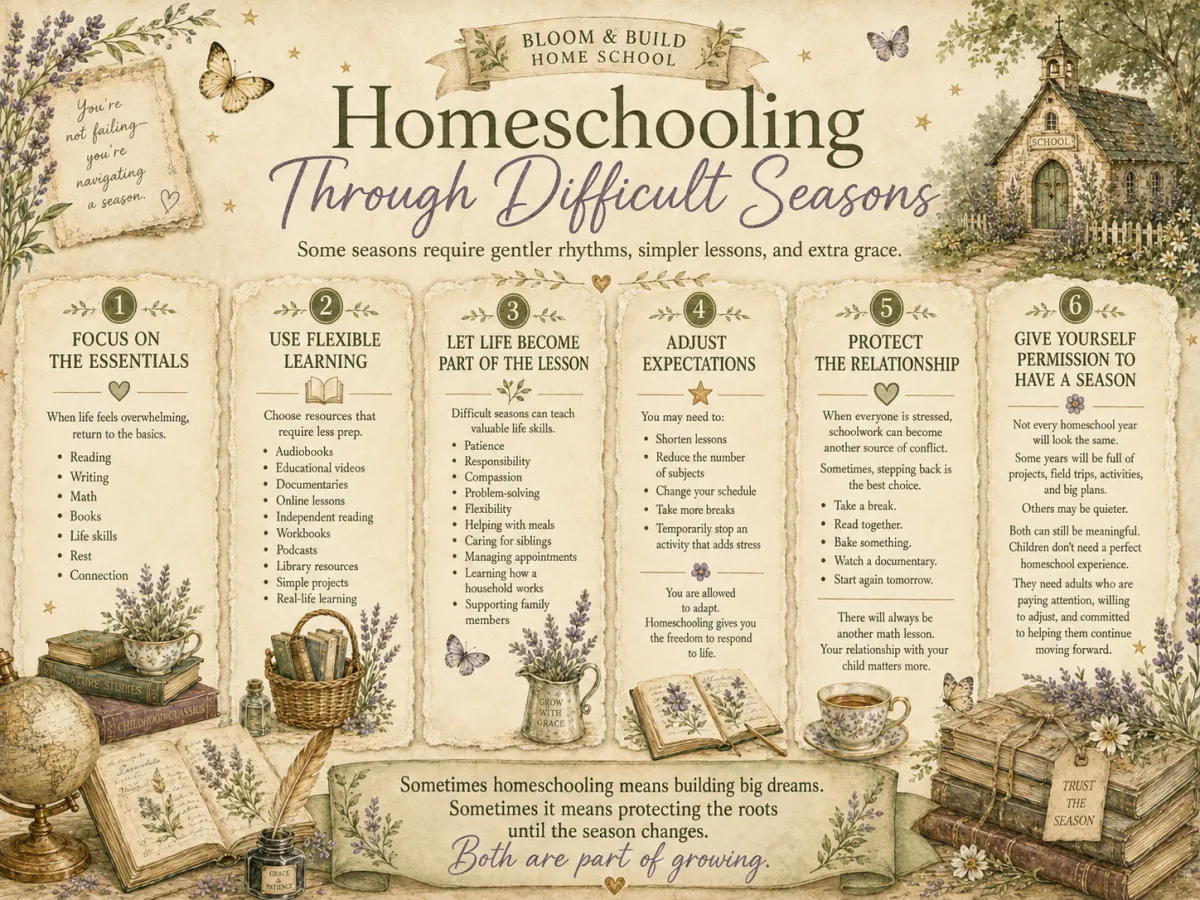
Homeschooling Through Difficult Seasons
Homeschooling does not happen in a perfect little bubble. Families go through illness, grief, moves, financial stress, job changes, new babies, medical appointments, family emergencies, burnout, learning struggles, and seasons when simply getting through the day takes more energy than usual.
Homeschooling Children Who Learn Differently
Sometimes the path is different. The destination can still be extraordinary.
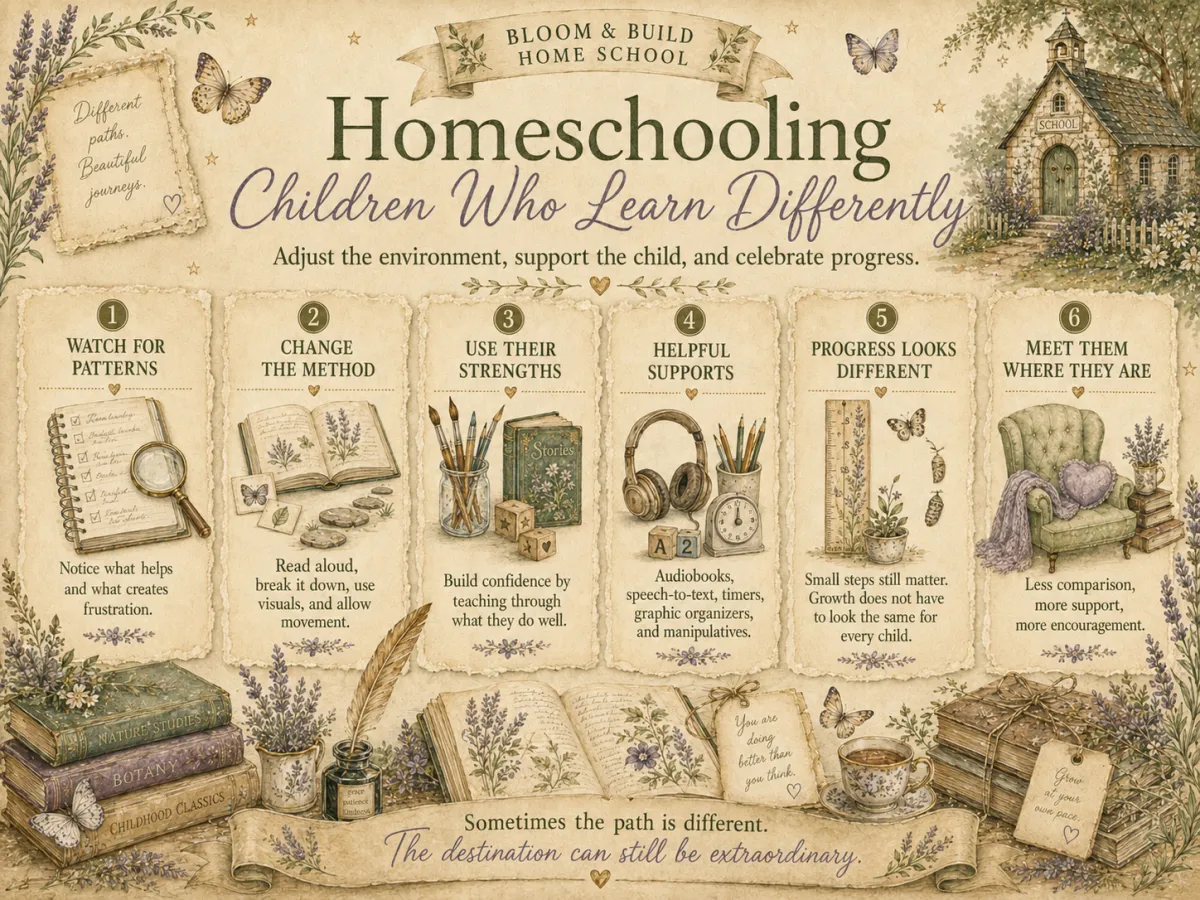
“When a flower doesn’t bloom, you fix the environment in which it grows, not the flower.” – Alexander Den Heijer
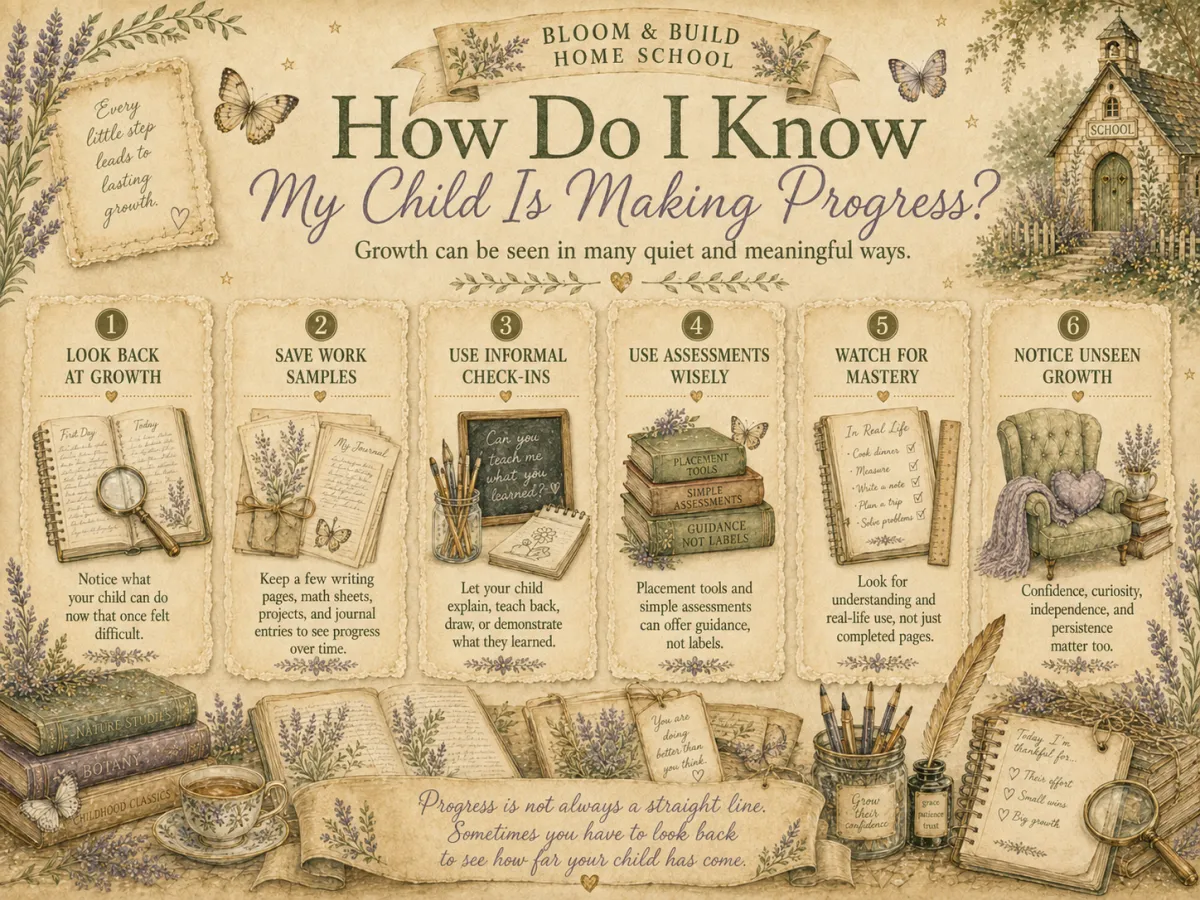
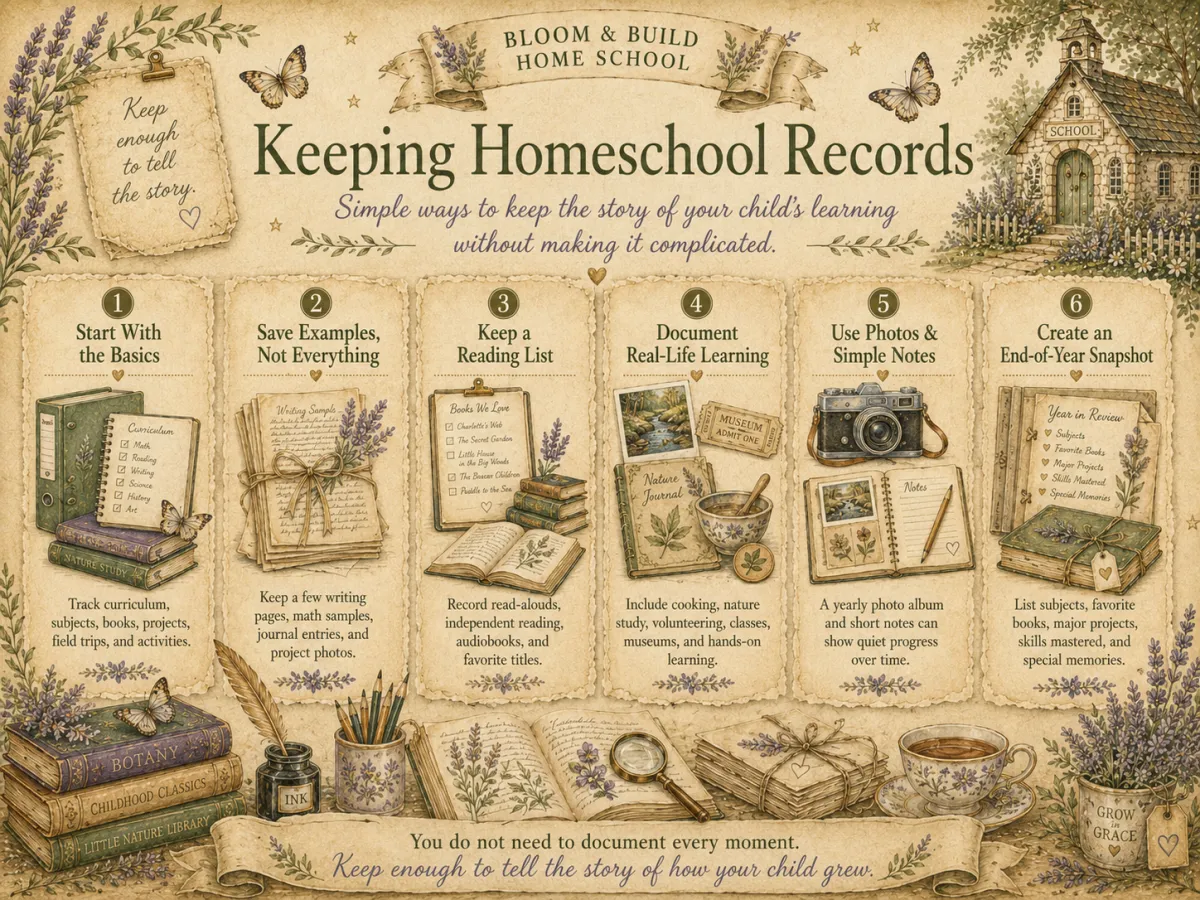
Keeping Homeschool Records Without Making It Complicated
Years from now, those records may become much more than paperwork.
They may become a reminder of the books you read together, the questions your child asked, the projects that covered the kitchen table, the places you explored, and the extraordinary amount of learning that happened in ordinary days.
You do not need to document every moment. Keep enough to tell the story of how your child grew.
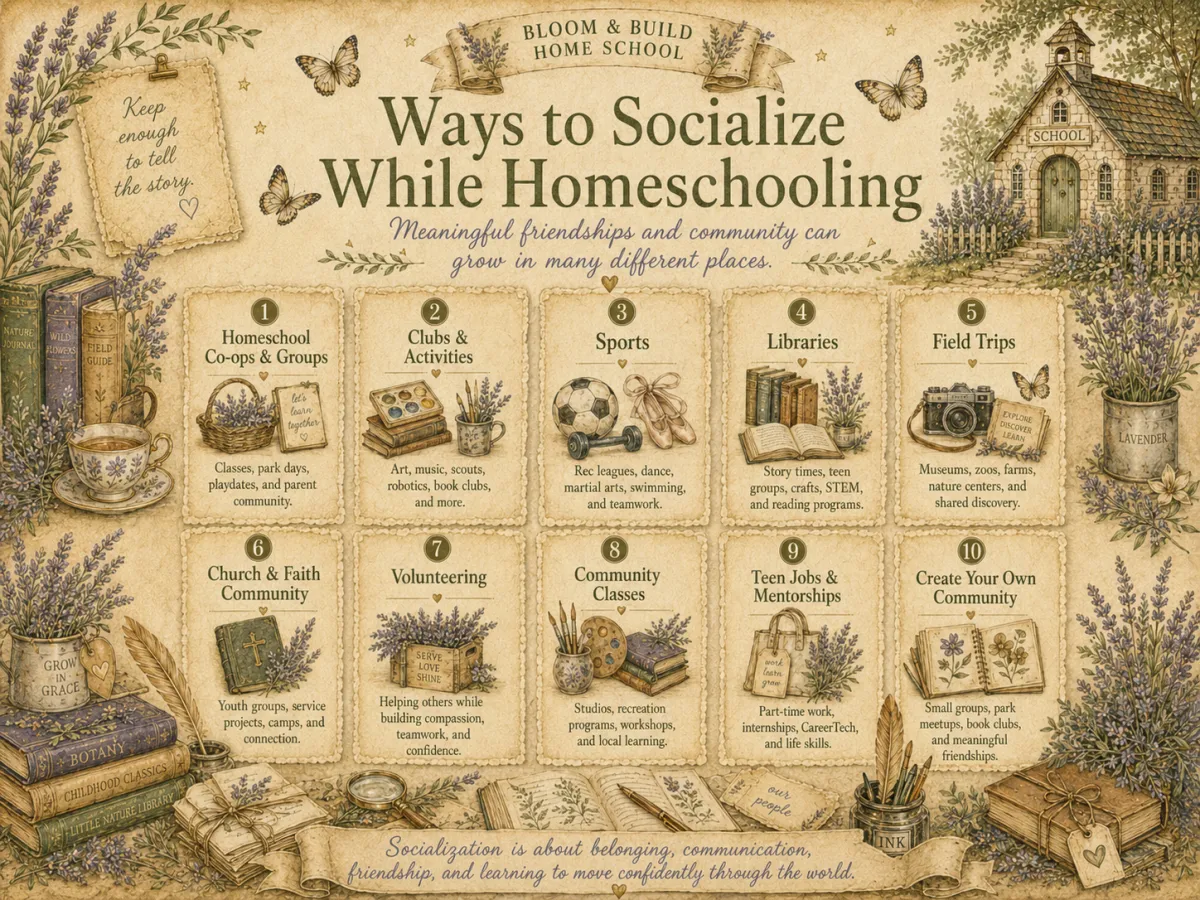
Ways to Socialize While Homeschooling
Socialization is not about how many children your child sees every day. It is about giving them opportunities to build relationships, practice communication, find belonging, and learn how to move confidently through the world.
Schooling at Home: The Option I Chose for My Children
Schooling at Home: The Option I Chose for My Children
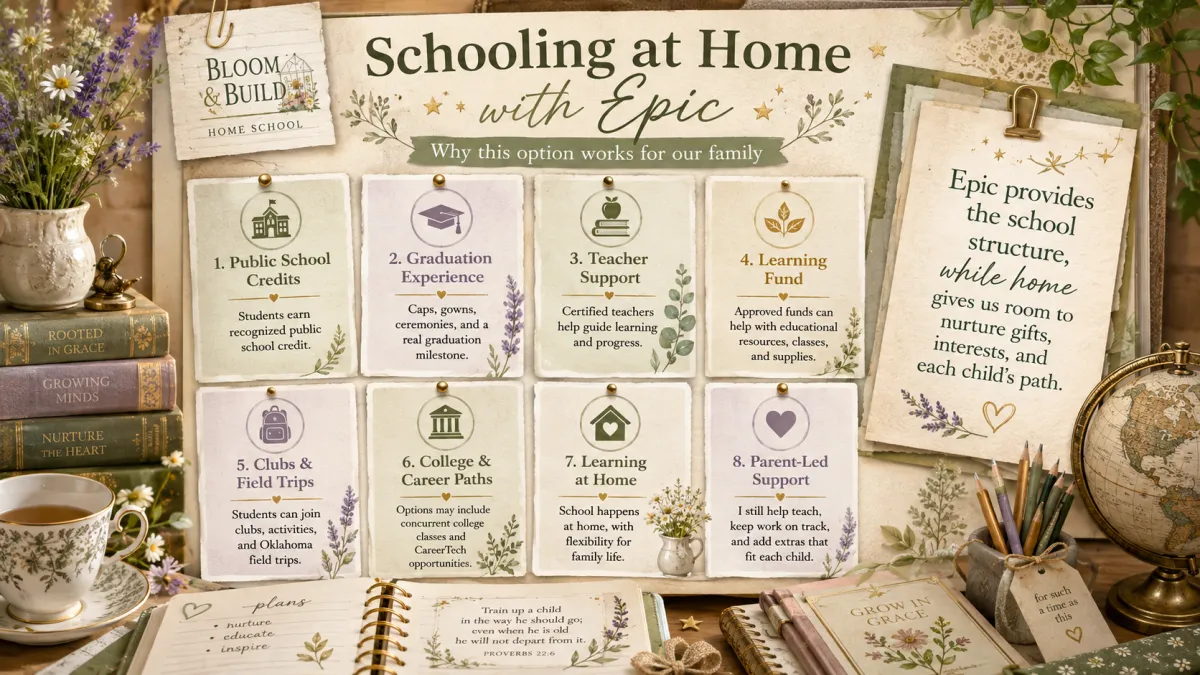
For my family, I chose what I call schooling at home. My children attend Epic Charter School, which gives them access to public school credits, certified teachers, and the opportunity to have the traditional graduation experience, while still allowing them to complete their education from home. That combination mattered to me. I wanted them to have the flexibility of learning at home without giving up the structure, accountability, or recognized credits that come with a public school program.
Even though my children have Epic and assigned teachers, a great deal of the day-to-day responsibility still falls on me. I am the one making sure they log in, understand the assignments, complete their work, stay on pace, ask for help when they need it, and continue moving forward. There are many days when I am still sitting beside them teaching, explaining, reteaching, encouraging, organizing, and helping them work through frustration. The school provides the curriculum and support, but I am still deeply involved in making sure learning actually happens at home.
What I love most about this option is that I can still make their education personal. Their required schoolwork gives us a foundation, but it does not have to be the limit of what they learn. I can add books, projects, field trips, documentaries, real-life learning, hands-on activities, career exploration, and experiences connected to the things that interest them. If one of my children discovers something they are passionate about, I can help them explore it further instead of waiting for it to appear in a curriculum.
Schooling at home has also allowed me to pay closer attention to each child's strengths, challenges, interests, and future path. I can see where they need extra help, where they are ready to move independently, and where a natural gift may be worth developing. That might mean adding more practice in a difficult subject, finding a class connected to an interest, exploring career-tech opportunities, building life skills, or simply giving them more time to discover what they enjoy.
For me, this is the best of both worlds. My children are still public school students with teachers, credits, academic expectations, and the opportunity to graduate with their peers, yet home remains the center of their daily education. I still have the ability to guide them, advocate for them, teach beside them, and create opportunities that go beyond their assigned coursework.
I call it schooling at home because that phrase reflects what it truly looks like in our house. We are not completely independent homeschoolers, and I am not simply watching my children complete online school either. We are working together, using the structure Epic provides while building an education around the individual children in front of me.
The school helps provide the path. I still have the privilege and responsibility of helping my children walk it, while making room for the gifts, interests, and dreams that are uniquely theirs.
Whatever You Choose, It Can Be the Right Option for Your Family
Your Family Gets to Write Its Own Story


Website Disclaimer
Bloom & Build Home School is a personal educational resource created to share my family's experiences with homeschooling, schooling at home, curriculum, learning resources, activities, and educational options available to families in Oklahoma.
I am a parent and homeschool educator sharing information based on my own experience, research, and resources I have found helpful. I am not an attorney, licensed educational diagnostician, school official, therapist, or representative of the Oklahoma State Department of Education, Epic Charter Schools, or any other school, curriculum provider, organization, or business mentioned on this website.
The information provided on this website is intended for general informational and educational purposes only. It should not be considered legal, medical, psychological, special-education, academic, financial, or professional advice.
Oklahoma Homeschool Information
Homeschool laws, education requirements, school policies, graduation requirements, testing requirements, enrollment procedures, funding programs, and available resources can change. Oklahoma currently recognizes homeschooling as an educational option, and the Oklahoma State Department of Education provides current guidance for families choosing home education.
Families should always verify current requirements directly with the Oklahoma State Department of Education or another appropriate official source before making educational decisions.
Epic Charter Schools
My family currently uses Epic Charter Schools, and portions of this website describe our personal experience schooling at home through Epic.
Bloom & Build Home School is not affiliated with, sponsored by, endorsed by, or operated by Epic Charter Schools.
Epic is an accredited Oklahoma public charter school system serving students throughout Oklahoma. Programs, curriculum choices, Learning Fund benefits, extracurricular opportunities, enrollment policies, graduation requirements, and other services may change from year to year. Families interested in Epic should verify all current information directly with Epic Charter Schools.
Outside Links and Resources
This website may link to schools, curriculum providers, educational websites, homeschool organizations, community programs, sports organizations, businesses, government agencies, and other third-party resources.
These links are provided as a convenience to families. Inclusion on Bloom & Build Home School does not necessarily constitute an endorsement or guarantee of any program, product, organization, curriculum, service, or educational method.
Third-party websites control their own information, pricing, availability, policies, privacy practices, and content. Always review a program carefully before enrolling, purchasing, or sharing personal information.
Every Child Is Different
Every child learns differently, and no curriculum, educational method, assessment, schedule, or school option is appropriate for every child.
Information shared on this website should be used as a starting point for your own research. Parents and guardians should consider their child's individual academic, developmental, emotional, physical, and educational needs when making decisions.
If you have concerns about your child's development, learning, speech, behavior, health, or educational progress, consider consulting an appropriately qualified professional.
Accuracy and Updates
I make every reasonable effort to provide helpful and accurate information; however, educational programs, laws, websites, prices, eligibility requirements, policies, and resources can change without notice.
I cannot guarantee that every resource or outside link will remain current, available, or accurate.
Always verify important information directly with the school, organization, provider, or government agency involved.
Personal Experience
Throughout Bloom & Build Home School, I share what has worked, what has not worked, and what I have learned while educating my own children.
Those experiences are exactly that: our family's experience.
Your family may make different choices, and that is okay.
The purpose of Bloom & Build is not to tell families there is one correct way to educate a child. It is to provide ideas, resources, encouragement, and information that can help parents explore the options available to them.
You know your child and your family best. Research your options, ask questions, use the resources that serve your child well, and give yourself permission to change direction when something no longer works.
Last updated: August 2026