
The Real Cost of Living in Oklahoma (2026 Guide)
The Real Cost of Living in Oklahoma (2026 Guide)
If you’ve been researching a move to Oklahoma, chances are you’ve heard people say things like:
“Oklahoma is so affordable.”
“You can get way more house for your money.”
“The cost of living is so much lower.”
And honestly?
For many families moving here from states like California, Texas, Florida, Colorado, Arizona, Washington, or New York… that’s true.
There’s also more nuance to the conversation.
While Oklahoma is generally one of the most affordable states in the country, there are still important costs people need to realistically prepare for when relocating here.
The goal of this guide is not to “sell” Oklahoma as magically cheap.
The goal is to help you understand what daily life actually costs here in 2026, from housing and utilities to groceries, childcare, transportation, insurance, and taxes, so you can make informed decisions and feel more confident planning your move.
And truthfully?
For many families, Oklahoma offers something they haven’t felt in a long time:
Breathing room financially.
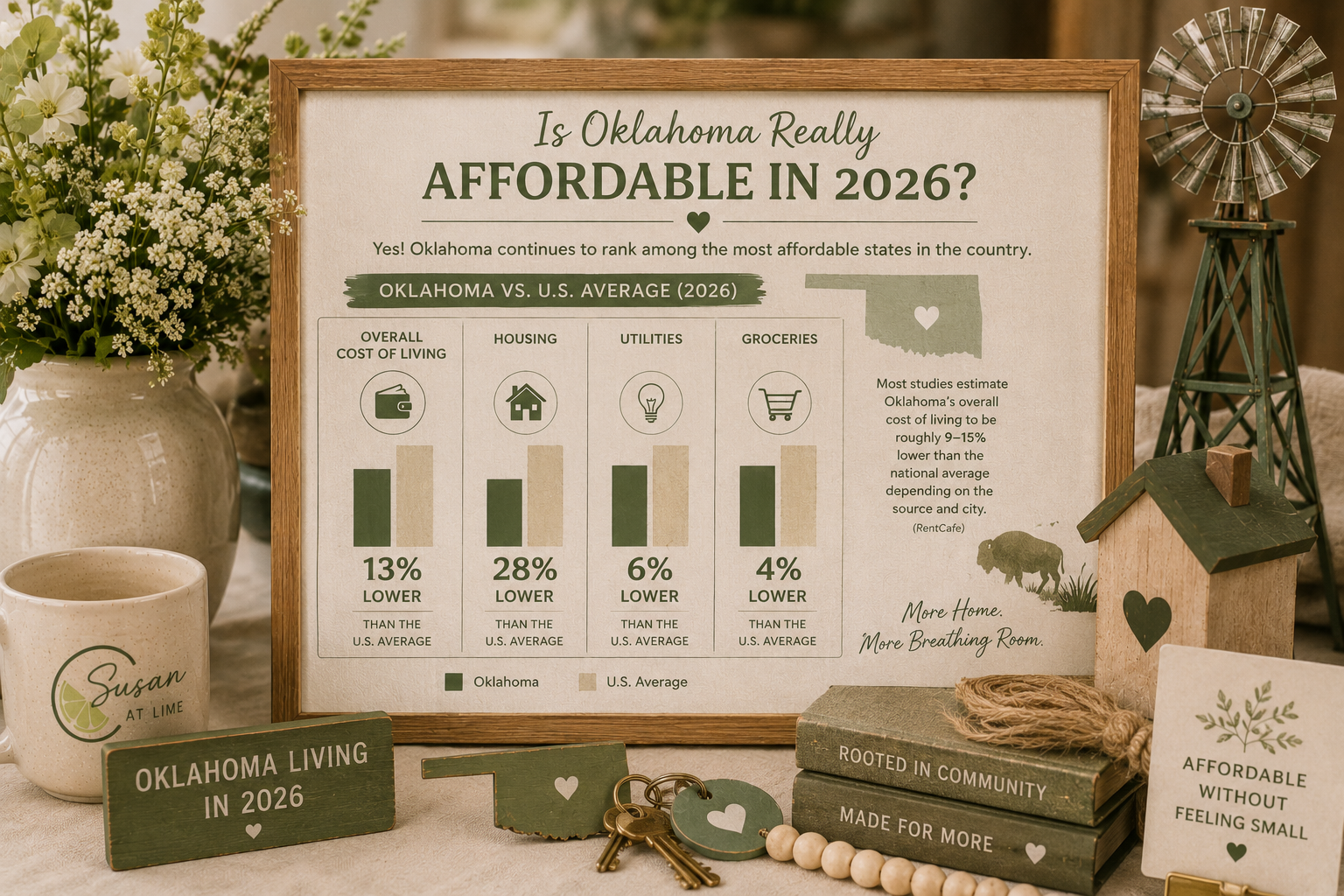
Is Oklahoma Really Affordable in 2026?
Yes, overall, Oklahoma continues to rank among the most affordable states in the country in 2026. Multiple cost-of-living reports continue placing Oklahoma well below the national average, especially when it comes to housing. (RentCafe)
Most studies currently estimate Oklahoma’s overall cost of living to be roughly 9–15% lower than the national average depending on the source and city being measured. (RentCafe)
Housing remains the biggest financial advantage.
Many reports show Oklahoma housing costs averaging around 24–31% lower than national averages. (RentCafe)
For families relocating from high-cost states, that difference can feel dramatic.
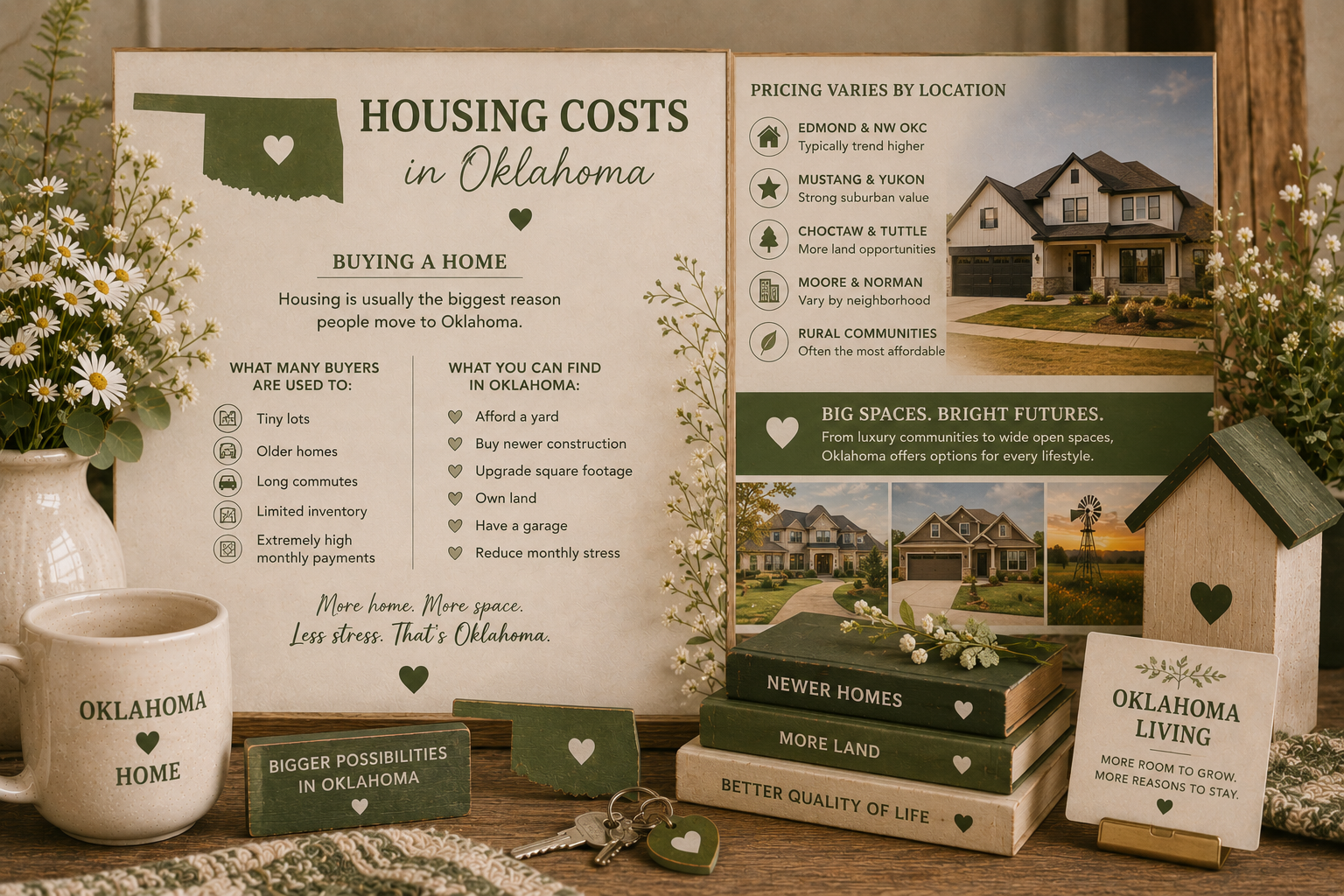
Housing Costs in Oklahoma
Buying a Home
Housing is usually the biggest reason people move to Oklahoma.
In many parts of the country, buyers have become accustomed to:
Tiny lots
Older homes
Long commutes
Limited inventory
Extremely high monthly payments
Then they start looking at Oklahoma listings and realize they may actually be able to:
Afford a yard
Buy newer construction
Upgrade square footage
Own land
Have a garage
Reduce monthly stress
That’s often the moment Oklahoma starts feeling realistic.
According to multiple housing and affordability reports, Oklahoma continues to have some of the lowest housing index numbers in the nation in 2026. (Yahoo Finance)
But pricing still varies heavily depending on where you live.
For example:
Edmond and parts of NW OKC typically trend higher
Mustang and Yukon often offer strong suburban value
Choctaw and Tuttle may offer more land opportunities
Moore and Norman vary heavily by neighborhood
Rural communities can sometimes offer even more affordability
The biggest misconception people have?
That “cheap” means outdated or undesirable.
Oklahoma has many newer developments, luxury communities, modern neighborhoods, and high-growth suburban areas.
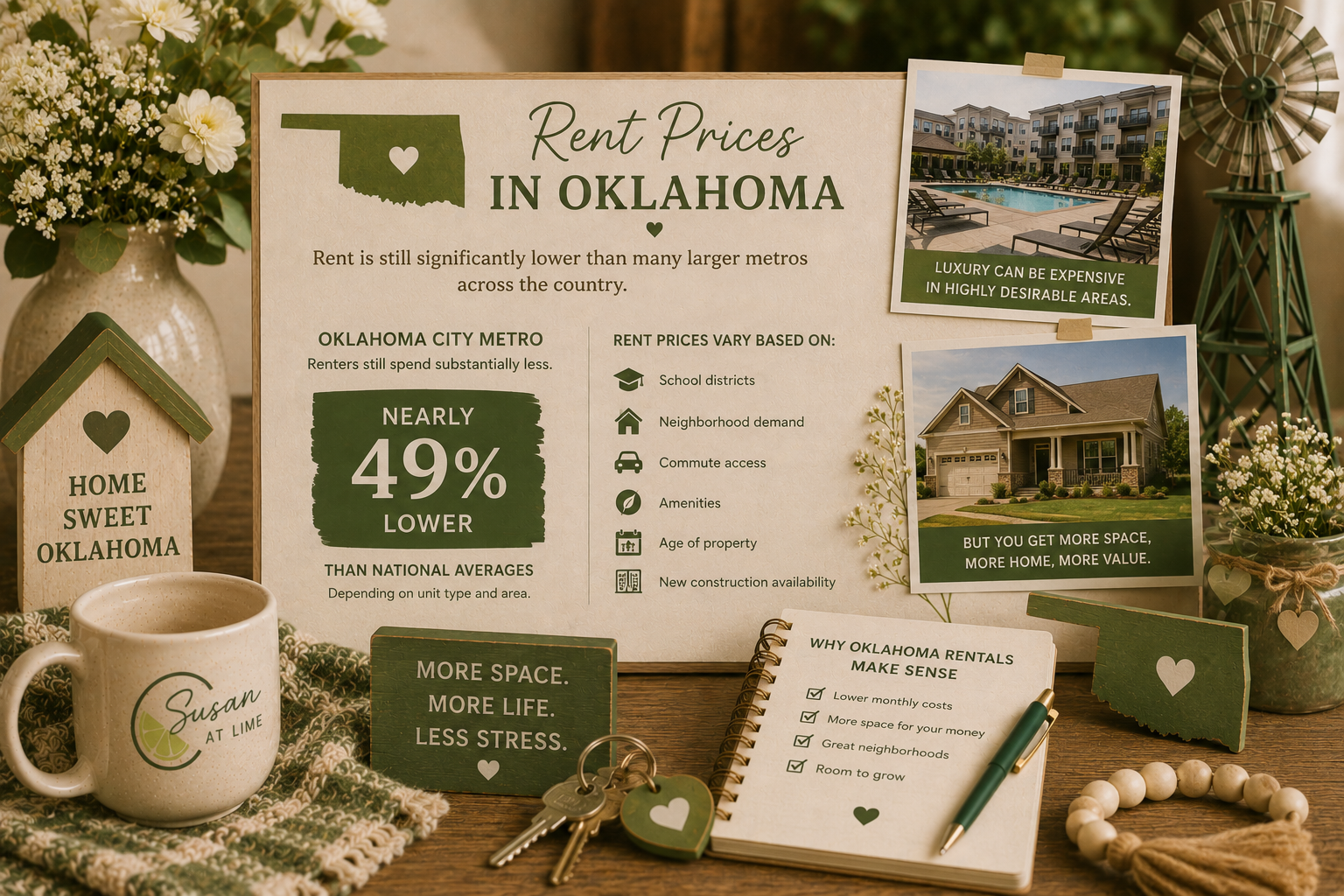
Rent Prices in Oklahoma
Rent is still significantly lower than many larger metros across the country, although prices have increased over the last several years.
In the Oklahoma City metro, renters still generally spend substantially less than national averages. Some studies estimate OKC rental housing costs nearly 49% lower than national averages depending on unit type and area. (Apartments.com)
That said, rent prices vary depending on:
School districts
Neighborhood demand
Commute access
Amenities
Age of property
New construction availability
Luxury apartments in highly desirable areas can still become expensive quickly.
But compared to many coastal markets, Oklahoma often still provides much more space for the money.
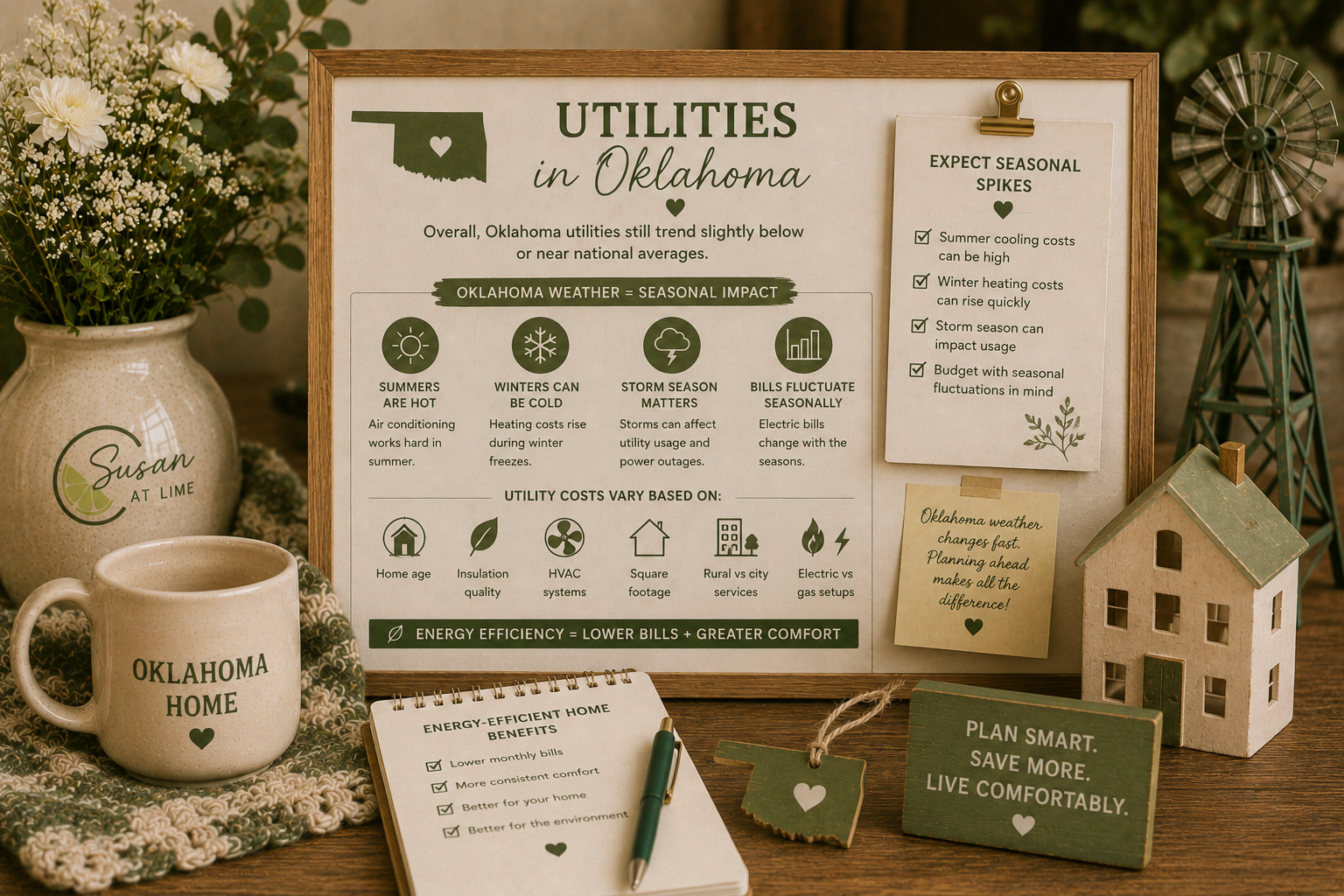
Utilities in Oklahoma
Utilities are one category people sometimes underestimate before moving here.
Overall, Oklahoma utilities still trend slightly below or near national averages depending on the report. (RentCafe)
However…
Oklahoma weather can create seasonal spikes.
Summers here are hot.
And winters can occasionally become much colder than out-of-state buyers expect.
That means:
Air conditioning works hard in summer
Heating costs rise during winter freezes
Storm season can affect utility usage
Electric bills fluctuate seasonally
Families relocating from moderate climates are often surprised by how quickly Oklahoma weather changes.
Utility costs can vary based on:
Home age
Insulation quality
HVAC systems
Square footage
Rural vs city services
Electric vs gas setups
One thing many Oklahoma homeowners eventually prioritize?
Energy efficiency.

Grocery Costs
Groceries in Oklahoma are generally slightly below national averages. (RentCafe)
Many families notice:
Meat prices can feel more manageable
Produce varies seasonally
Dining out is often cheaper than major metros
Local agriculture helps keep some food pricing competitive
But grocery costs have still increased nationwide over the last several years, and Oklahoma isn’t immune to inflation.
The good news is:
For many relocation families, the savings in housing often offsets grocery increases far more comfortably than in higher-cost states.

Transportation Costs
Oklahoma is extremely car-dependent.
This is one of the biggest practical adjustments for out-of-state movers.
Unlike cities with extensive public transit systems, most Oklahoma residents drive daily.
That means transportation costs matter.
You’ll want to budget for:
Gas
Insurance
Maintenance
Tires
Registration
Vehicle repairs
Longer suburban driving distances
The upside?
Traffic is generally much lighter than many large metro areas.
Most people relocating from:
Los Angeles
Dallas
Miami
New York
Seattle
Denver
often feel immediate relief regarding commute stress.
Transportation costs in Oklahoma still trend below national averages overall. (RentCafe)
But because driving is essential here, vehicle ownership becomes more important than in some urban states.

Insurance Costs
Insurance is one area people should research carefully before relocating.
Because Oklahoma experiences:
Hail
Windstorms
Tornado activity
Severe weather
home insurance can sometimes cost more than newcomers expect.
Rates vary heavily depending on:
Roof age
Construction materials
Location
Claims history
Storm exposure
Deductibles
Auto insurance also varies based on:
Commute distances
Vehicle types
Driving history
ZIP code
For some families relocating from Florida or California, Oklahoma insurance may still feel more manageable.
For others, especially buyers unfamiliar with hail-prone regions, insurance costs may come as a surprise.
This is one reason local guidance matters when budgeting for a move.

Property Taxes in Oklahoma
One thing many buyers appreciate about Oklahoma is that property taxes are often lower than many other states.
Of course, exact amounts depend on:
County
School district
Property value
Exemptions
City boundaries
But overall, Oklahoma tends to remain more reasonable than many heavily taxed states.
Homestead exemptions can also help primary homeowners reduce taxable value.
For relocation buyers coming from:
Texas
Illinois
New Jersey
New York
property taxes in Oklahoma often feel significantly more manageable.
Income Taxes in Oklahoma
Oklahoma does have state income tax.
That sometimes surprises buyers relocating from states like Texas or Florida.
State income tax rates vary depending on income level and tax structure.
However, even with state income tax, many families still find their overall monthly cost of living substantially lower because of:
Housing affordability
Lower daily expenses
Reduced commute stress
Lower property costs
As always, it’s smart to speak with a tax professional regarding your specific situation.
Childcare Costs
Childcare is one of the most overlooked relocation expenses.
While Oklahoma childcare can still be less expensive than many major metro areas, it remains a significant monthly expense for families.
Costs vary based on:
Age of child
Full-time vs part-time care
Private programs
Location
Waitlists
School schedules
Many families relocating to Oklahoma appreciate that lower housing costs may create more flexibility in budgeting for childcare or allow one parent to reduce work hours if desired.
Healthcare Costs
Healthcare costs in Oklahoma generally trend slightly below national averages overall. (RentCafe)
The Oklahoma City metro continues expanding medical infrastructure and specialty care access.
However, availability can vary depending on:
Rural vs metro areas
Insurance networks
Specialists
Pediatric services
Mental health care
Therapy access
For families with ongoing medical needs, researching providers before relocating is extremely important.
What Salary Do You Need to Live Comfortably in Oklahoma?
This depends heavily on:
Household size
Debt
Childcare
Housing goals
Lifestyle
Location
Health expenses
Some estimates suggest comfortable living in Oklahoma may range between roughly $45,000–$90,000+ depending on household size and lifestyle expectations. (Houzeo)
A family wanting:
Acreage
New construction
Top amenities
Luxury finishes
Larger homes
Frequent travel
will obviously have different needs than someone seeking a simpler lifestyle.
But overall, many relocation families feel their income stretches significantly further here than where they previously lived.
The Hidden Financial Benefits of Oklahoma
Sometimes affordability isn’t just about lower prices.
Sometimes it’s about reducing pressure.
Many people relocating to Oklahoma say they experience:
Less financial stress
More time with family
Shorter commutes
Less burnout
More breathing room
Ability to save again
Ability to buy instead of rent
Space for hobbies, pets, workshops, or gardens
Those lifestyle changes matter too.
And honestly?
That’s often the part people don’t fully understand until after they move here.
The Truth About “Cheap Living”
Oklahoma is affordable compared to much of the country.
But affordability doesn’t mean:
No budgeting
No inflation
No rising costs
No planning
Like everywhere else, prices have increased over time.
Groceries cost more than they did years ago.
Insurance has risen.
Interest rates affect affordability.
Construction costs fluctuate.
The difference is that many Oklahoma families still feel they have more flexibility and options compared to higher-cost states.
Final Thoughts
The real cost of living in Oklahoma in 2026 is about more than numbers on a spreadsheet.
Yes, housing is often more affordable.
Yes, your dollar may stretch further.
Yes, many daily expenses are lower than national averages.
But what many families truly gain when moving to Oklahoma is something harder to measure:
Breathing room.
Room for a yard.
Room for family dinners.
Room for slower evenings.
Room to build a life without feeling financially squeezed every second.
And while every family’s financial situation is different, Oklahoma continues to offer something many people across the country are searching for right now:
A chance to live a little easier.
Disclaimer
Cost of living information, housing prices, insurance rates, taxes, utility costs, and market conditions can change at any time and may vary by city, neighborhood, provider, household size, and personal financial situation. This blog is intended for general informational purposes only and should not be considered financial, tax, insurance, or legal advice. Always verify current information with licensed professionals and local providers before making relocation or financial decisions.