
Oklahoma City Neighborhoods Guide
Every Corner of OKC Has Its Own Story
Your complete guide to the districts, communities, and suburbs that make up Oklahoma City
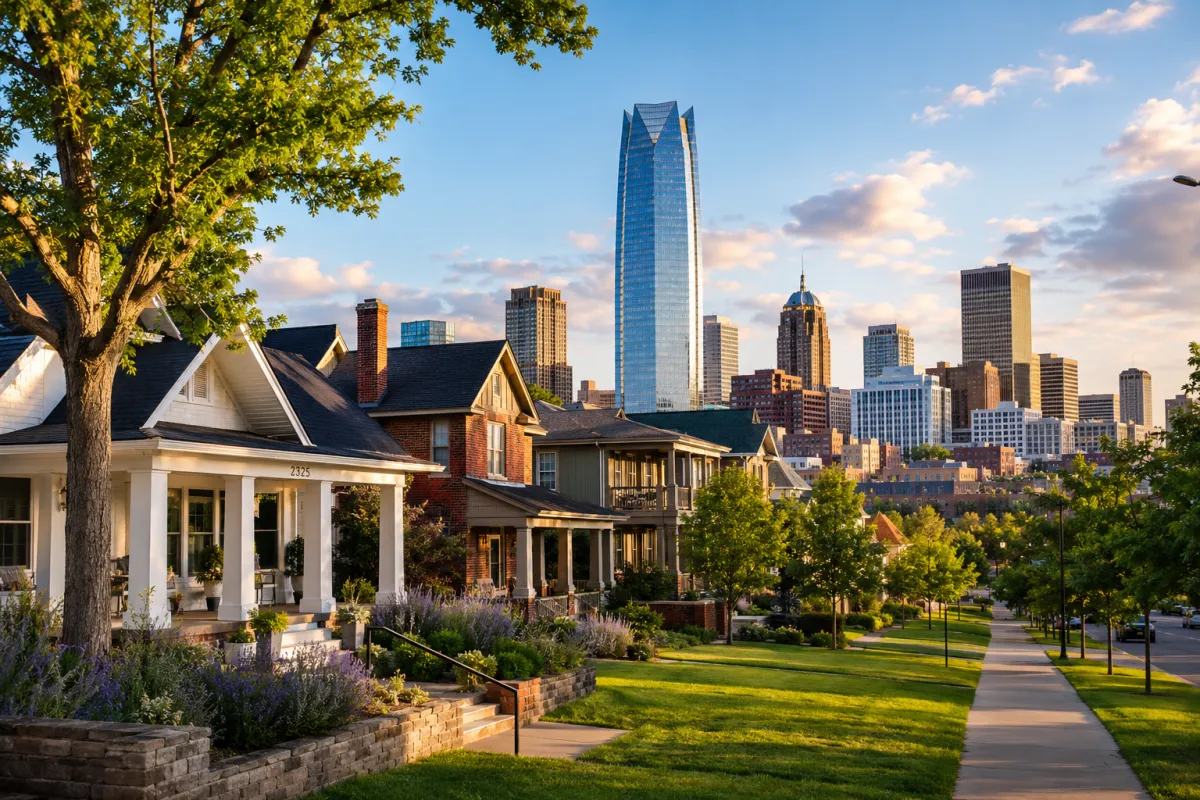
One of the things people underestimate about Oklahoma City is just how much personality it has, block by block, district by district.
OKC is not one thing. It is not just downtown. It is not just suburbs. It is not just an energy corridor or a college-town spillover. It is all of those things living close together, and each area carries its own character, its own pace of life, its own reasons someone would choose it over everywhere else.
There is the person who wants to walk to dinner, catch live music, and feel the pulse of the city every single day. There is the family that wants a yard, strong schools, and a neighborhood parade. There is the young professional who wants a loft in a historic building with exposed brick and a coffee shop on the ground floor. There is the buyer who wants acreage, quiet, and room to breathe without leaving the metro.
Oklahoma City genuinely has all of them.
This guide is for anyone trying to figure out where they fit, whether you are relocating from another state, moving within the metro, or simply trying to understand how OKC is actually organized before you begin your home search. I have written it honestly, with real detail about what each area feels like to live in, not just what it looks like in listing photos.
Take your time here. The right neighborhood changes everything.
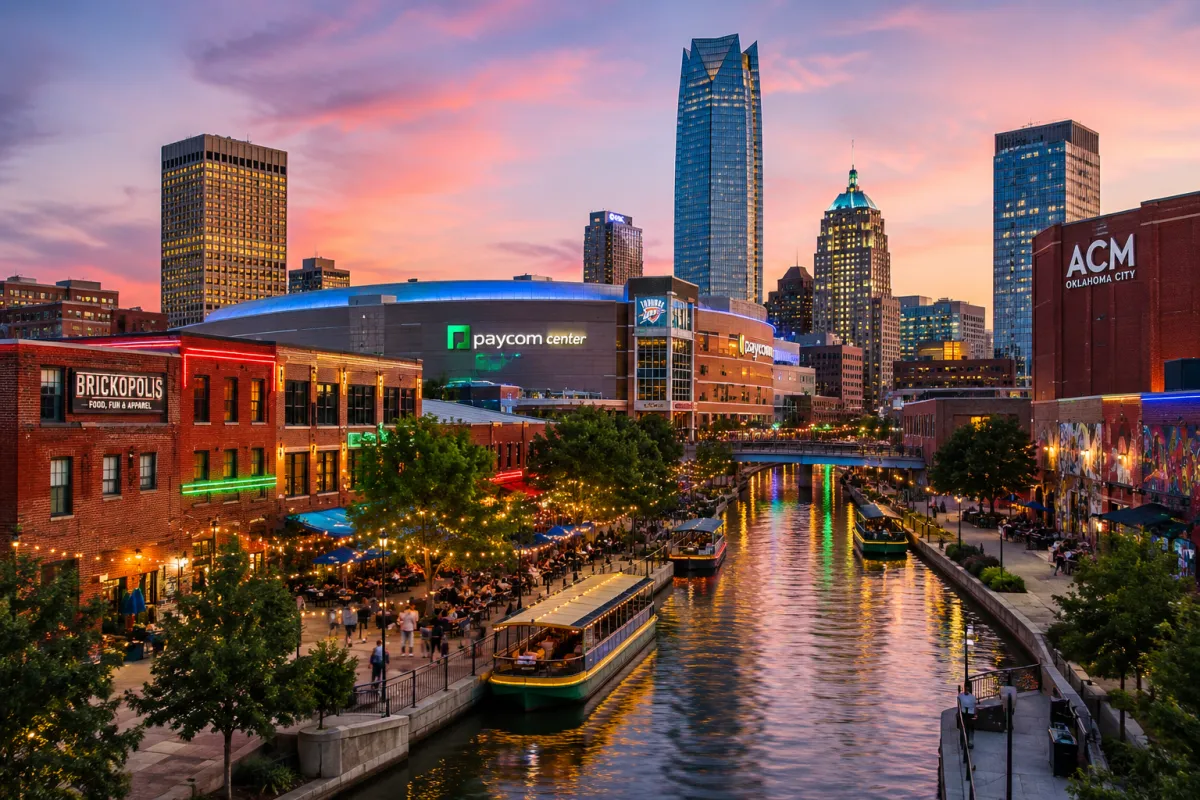
Downtown Oklahoma City, The City's Beating Heart
Downtown OKC has undergone one of the most sustained urban transformations of any American city in the last twenty-five years. What was once largely abandoned warehouse blocks and underused commercial space has become a genuine urban destination, and the momentum is still building.
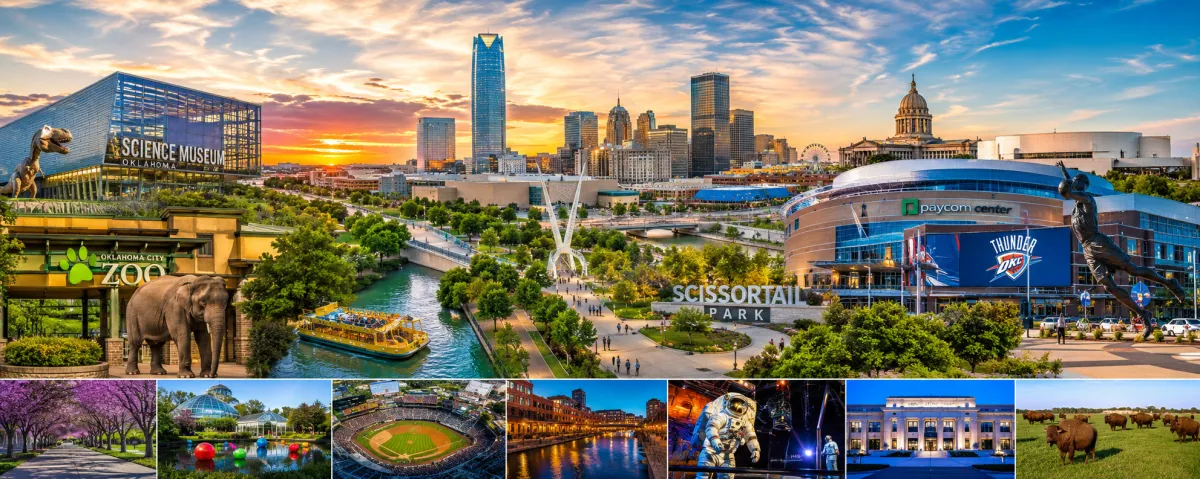
The catalyst was MAPS, the Metropolitan Area Projects program, a series of sales-tax-funded civic investments that have been renewing the city since the mid-1990s. MAPS funded the canal in Bricktown, the Chesapeake Energy Arena (now Paycom Center), the Myriad Botanical Gardens expansion, Scissortail Park, the Oklahoma River improvements, and dozens of other projects that collectively transformed the downtown experience. Multiple MAPS rounds have continued that investment, each building on the last.
Today, downtown OKC is anchored by Paycom Center, home of the NBA Champion Thunder, and surrounded by distinct districts that each have their own flavor.
The Central Business District is the corporate and governmental core of the city, office towers, the state capitol, Bicentennial Park, and the Oklahoma City Museum of Art, which houses one of the largest collections of Dale Chihuly glass sculpture in the world. The Oklahoma City National Memorial, a site of deep significance in the city's history, sits at the edge of the CBD and draws visitors from across the country.
Who lives here: Professionals who want to walk to work, people who want urban density without the cost of coastal cities, buyers who want to be in the center of what is happening in OKC. Downtown loft and condo living is growing, with a mix of high-rise apartments and historic building conversions offering options from studios to spacious multi-bedroom units.

A Calm, Clear Guide to HUD Section 184 Native American Home Loans in Oklahoma
Explore HUD 184 loans for Native American homebuyers in Oklahoma. Learn eligibility and benefits. ...more
Moving To Oklahoma ,Home Buyer Education
September 01, 2026•14 min read
Understand Property Taxes and Insurance: What OKC Metro Homeowners Need to Know Before the Monthly Payment Surprises Them
Learn how property taxes, homeowners insurance, escrow, homestead exemption, roof coverage, and storm deductibles affect your real monthly payment in the OKC metro. ...more
Oklahoma Real Estate Education ,Moving To Oklahoma Home Buyer Education &Home Owner Education
June 20, 2026•23 min read
Is Oklahoma City Still Affordable in 2026?
Relocating and wondering if OKC is still a deal? Here's a real look at 2026 home prices, taxes, and cost of living compared to the rest of the country. ...more
Moving To Oklahoma
June 20, 2026•3 min read
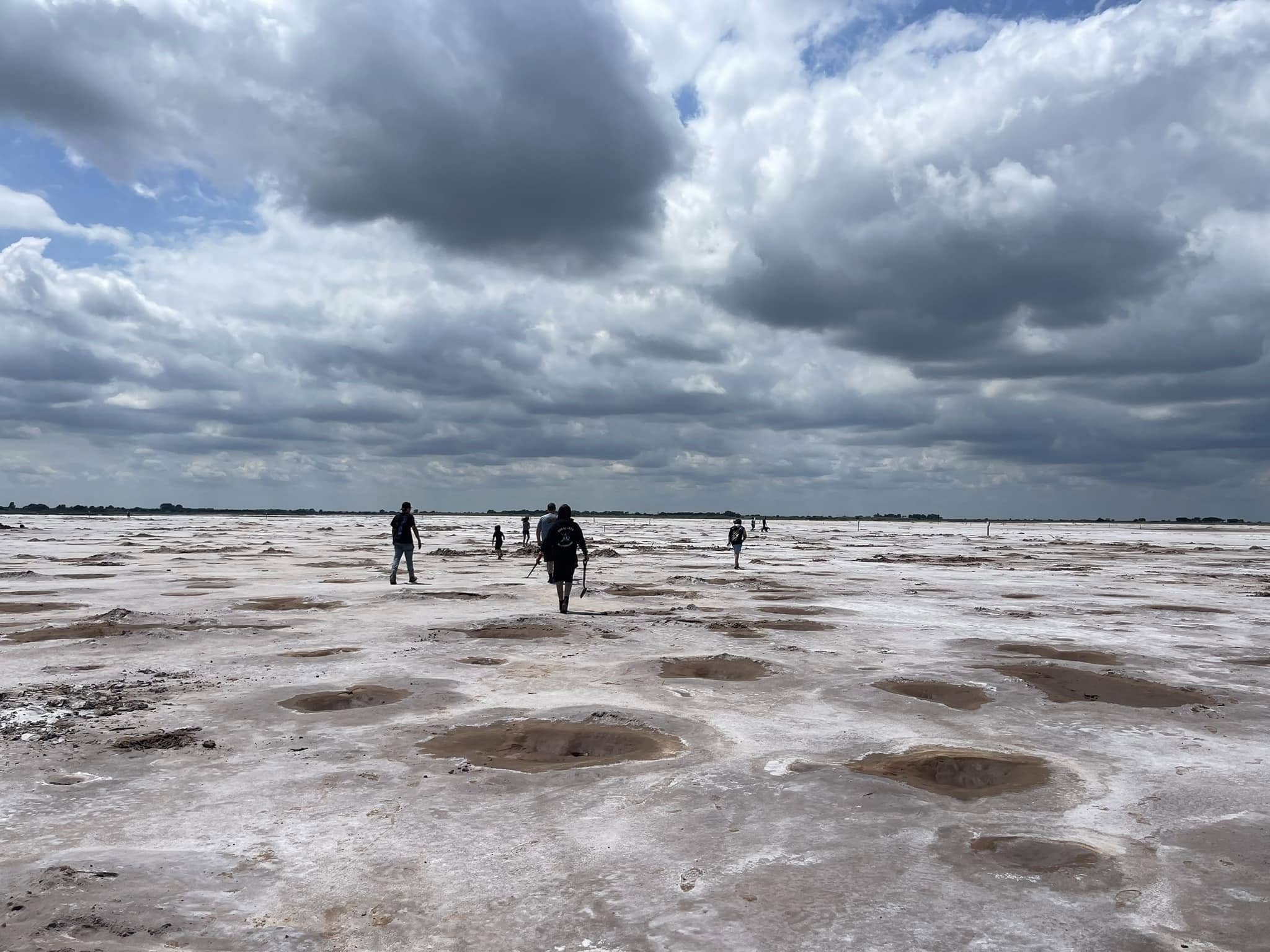
Crystal Digging at Great Salt Plains: Our Family's Complete Guide
Plan a crystal digging day trip from OKC to the Great Salt Plains. Learn what to bring, where to dig, and tips for a successful visit. ...more
Living in Oklahoma City ,Explore Oklahoma | Travel, Attractions & Hidden Gems
June 11, 2026•5 min read
How to Find a Home That Works for a Family With Special Needs
Learn what to look for when buying a home for a family with special needs, including accessibility, sensory needs, and safety features. ...more
Living in Oklahoma City ,My Real Estate Journey Community Support in OKC and Surrounding Areas &Moving To Oklahoma
June 11, 2026•5 min read
Oklahoma Farmers Markets: A Guide to the Best Local Markets Near OKC
Explore the best farmers markets near Oklahoma City with this guide to fresh produce, local vendors, handmade goods, and family fun. ...more
Living in Oklahoma City ,Explore Oklahoma | Travel, Attractions & Hidden Gems Explore Communities Across the OKC Metro Local Favorites Around Oklahoma City Moving To Oklahoma &Home Owner Education
June 11, 2026•7 min read
OKC's Entertainment District Along the Canal
Statistics can describe a city. Conversations tell the real story.
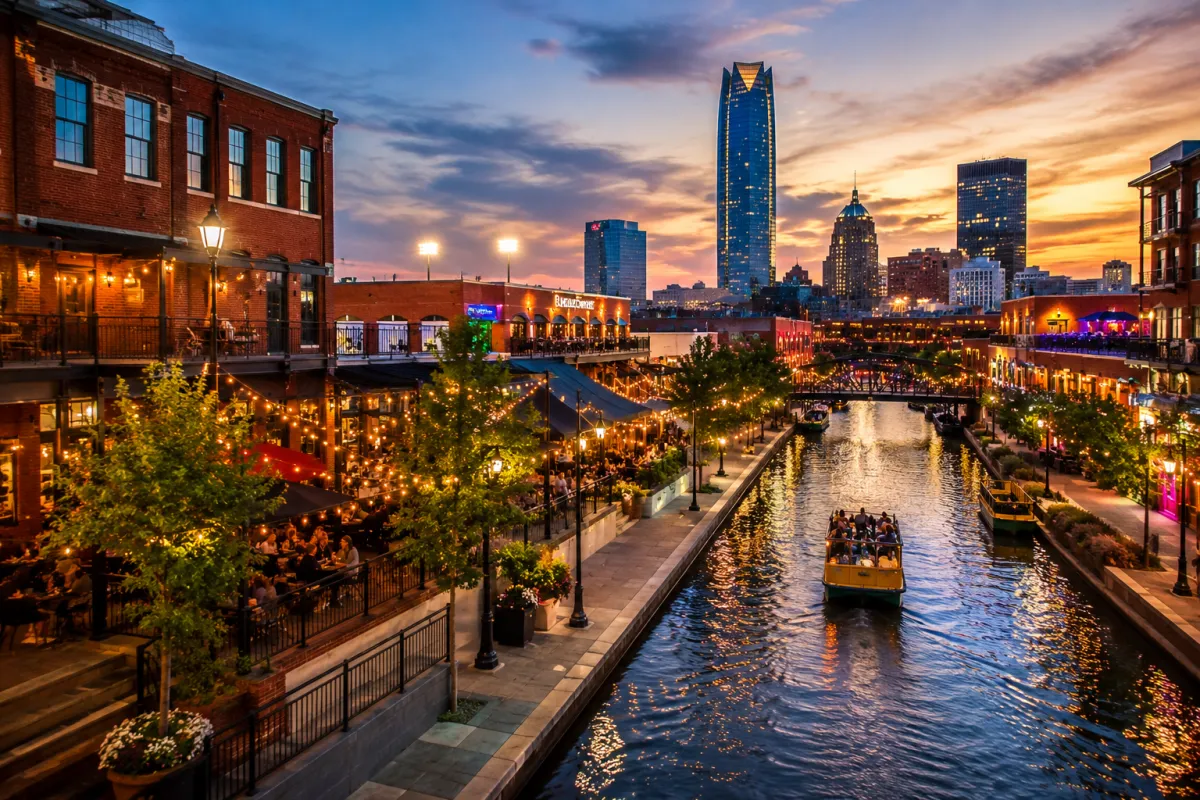
Bricktown is the most recognizable neighborhood in OKC to people who have never lived here, and for good reason. A former industrial warehouse district that sat empty for decades, it was transformed starting in the 1990s into the city's primary entertainment corridor, and it has only deepened and diversified since.
The canal that runs through Bricktown is the centerpiece of the district, a half-mile waterway with boat rides, riverside dining, walking paths lined with outdoor seating, and a visual identity that surprises people who expect Oklahoma City to be purely land and prairie. The canal was part of the original MAPS investment and remains one of the most-visited public spaces in the state.
Along the canal and throughout the district you will find a dense concentration of restaurants, live music bars, sports bars, nightclubs, and entertainment venues. The Criterion, one of OKC's premiere indoor live music and event venues, is here. Harkins Bricktown Cinemas, the Bricktown River Walk Park, and the Centennial Land Run Monument, a sweeping bronze sculpture commemorating the 1889 Land Run, all contribute to the district's character.
Bricktown is also home to Chickasaw Bricktown Ballpark, the longtime home of the Oklahoma City Dodgers, the AAA affiliate of the Los Angeles Dodgers. Minor league baseball here is genuinely great entertainment, accessible, affordable, family-friendly, and surprisingly atmospheric on a warm Oklahoma evening.
The OKC Streetcar connects Bricktown to Midtown, the CBD, and other core neighborhoods, making car-free evenings a real possibility for residents of the urban core.
What real estate looks like here: Bricktown offers primarily apartments, condos, and loft-style conversions in historic brick warehouse buildings. Median sale prices hover around $420,000. The neighborhood attracts young professionals and urban buyers who want to live inside the entertainment district rather than just visit it. Parking and urban density are real considerations, this is not a neighborhood for people who want land or quiet.
Who this neighborhood is for: Urban lifestyle seekers, young professionals, people who value walkability and nightlife, buyers who want to be steps from where things happen in OKC.
Midtown ~ Where Urban Renewal Meets Historic Character
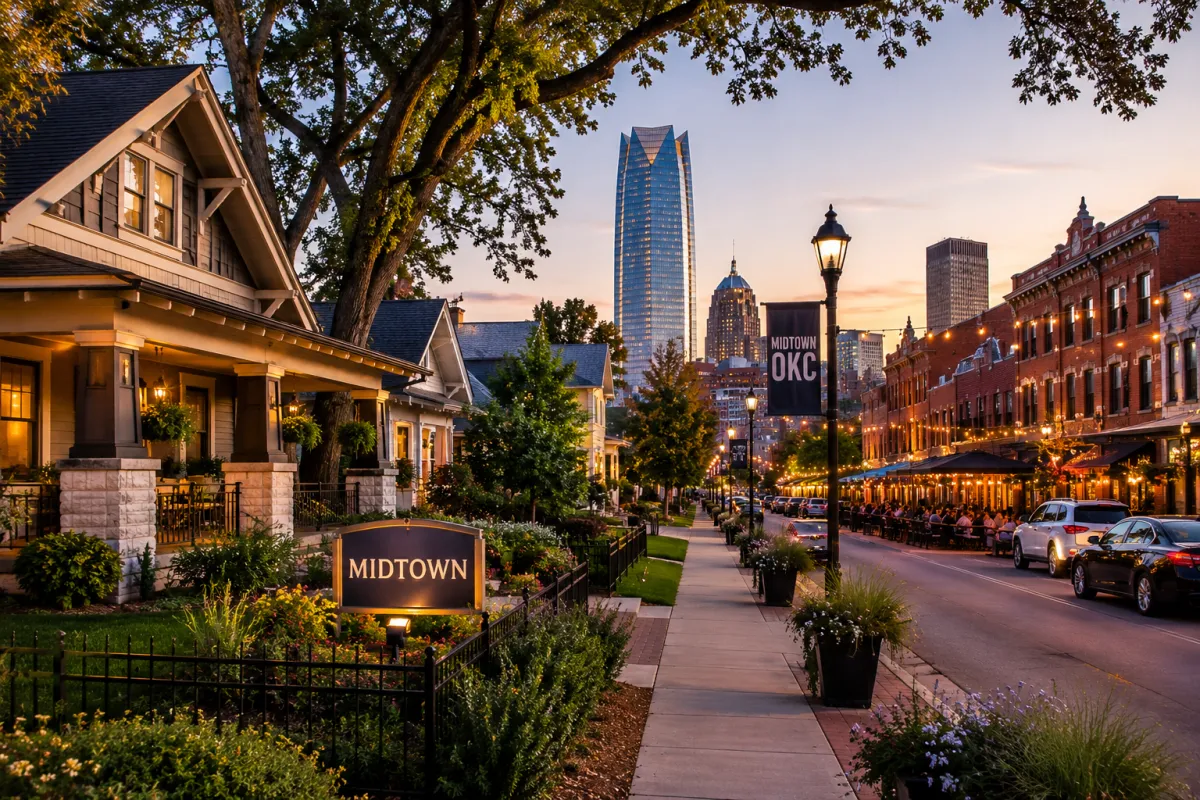
Midtown sits northwest of downtown, between Automobile Alley to the east and the broader Asia District to the north, and it represents one of the most interesting ongoing transformations in the entire city. It is a neighborhood in the middle of rediscovery, historic homes and older commercial buildings being thoughtfully renovated, new restaurants and boutiques opening in spaces that sat vacant for years, and an energy that feels genuinely urban without being purely nightlife-driven.
The residential side of Midtown includes some of Oklahoma City's most interesting historic homes, Craftsman bungalows, four-squares, and early-20th-century houses that carry real architectural character. The proximity to St. Anthony Hospital (the city's oldest hospital) means there is a consistent medical professional population living here, which contributes to the neighborhood's mix of working professionals alongside the arts-and-dining crowd.
Midtown's restaurant scene has become one of the most talked-about in the city. Establishments like The Chester, Nonesuch (the James Beard-nominated tasting menu restaurant), and several bar and cocktail destinations have made Midtown the dining neighborhood of choice for OKC food enthusiasts. Le Parisien, an authentic French bistro, opened here to strong reviews. The neighborhood gets busy at happy hour on weekdays and fully alive on weekend evenings.
The OKC Streetcar routes through Midtown, connecting residents to Bricktown, downtown, and the broader urban core without requiring a car for most evening activities.
What real estate looks like here: Midtown offers a mix of historic single-family homes (increasingly renovated and appreciating), apartments in converted buildings, and newer urban housing. Buyers looking for a home with character and walkability, at a price point below Edmond, find Midtown compelling.
Who this neighborhood is for: Urban professionals, people who value historic architecture, restaurant industry workers, healthcare professionals, buyers who want walkability and city energy with a slightly more residential feel than Bricktown.
Automobile Alley — Historic District, Modern Energy
If Midtown is where you go for dinner, Automobile Alley is where you go for the experience of shopping, dining, and wandering through one of OKC's most architecturally significant corridors.
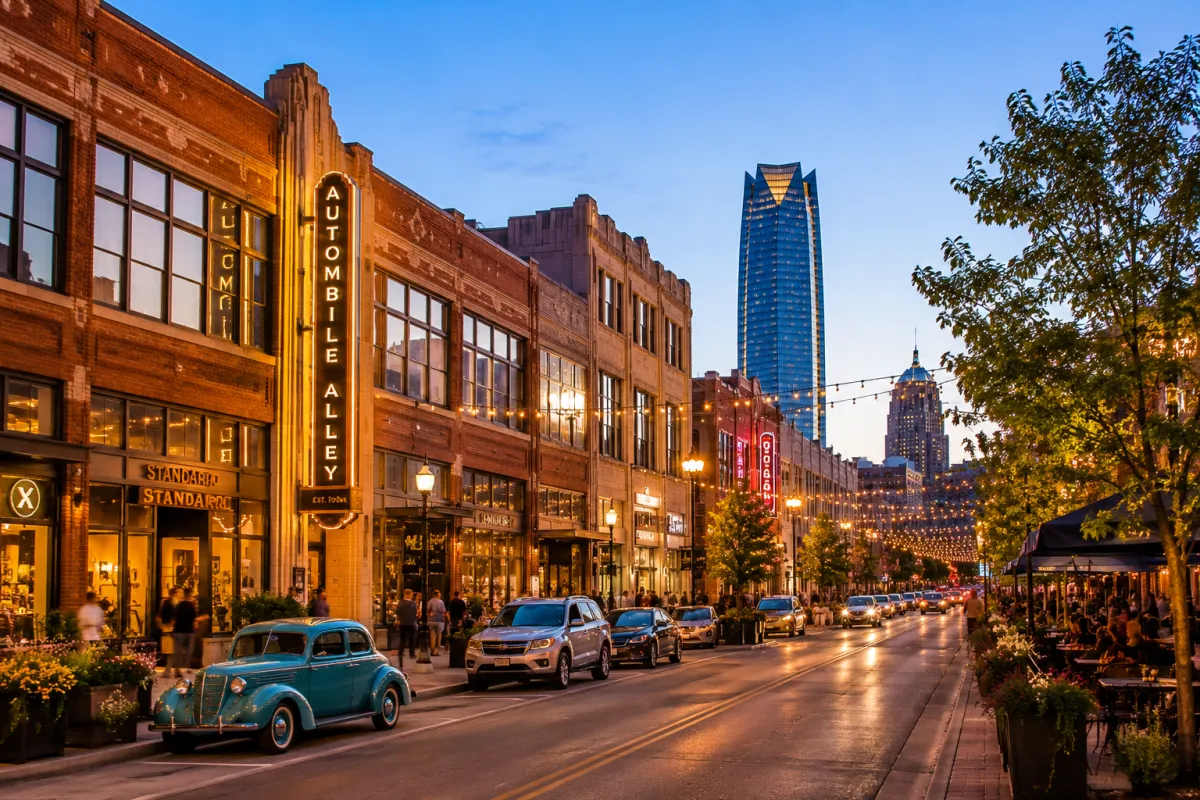
Automobile Alley runs along North Broadway Avenue just north of downtown and takes its name from an unlikely history: in the 1920s, this stretch was lined with automobile dealerships, filling the ground floors of handsome brick commercial buildings with Model Ts and Studebakers. The dealerships are long gone, but the buildings, listed on the National Register of Historic Places since 1999, remain, and they have been transformed into one of the most appealing urban retail and dining experiences in the city.
The buildings themselves are worth noticing. Art Deco facades, large storefront windows, and brick detailing give the district a visual richness that newer construction rarely achieves. Ground floors hold boutique shops, independent restaurants, craft cocktail bars, and creative businesses. Upper floors have been converted into office spaces and residential lofts, creating a genuinely mixed-use neighborhood in the traditional sense.
Tesla maintains a showroom and service center in Automobile Alley, the last automotive presence on a street that once sold nothing but cars, brought full circle in an unexpected way.
What real estate looks like here: Automobile Alley housing is primarily modern lofts and apartment conversions in historic buildings, with a median sale price among the highest in the urban core, around $1.26 million for ownership units. Most residents rent rather than buy in this district. The premium is for the location, the architecture, and the walkability.
Who this neighborhood is for: Urban professionals, people who value historic design, buyers who want a boutique-hotel feeling for daily life, renters who want the most walkable address in the city.

The Paseo Arts District ~ Oklahoma City's Creative Soul
If you have been told that Oklahoma City does not have a vibrant arts community, take a walk through the Paseo.
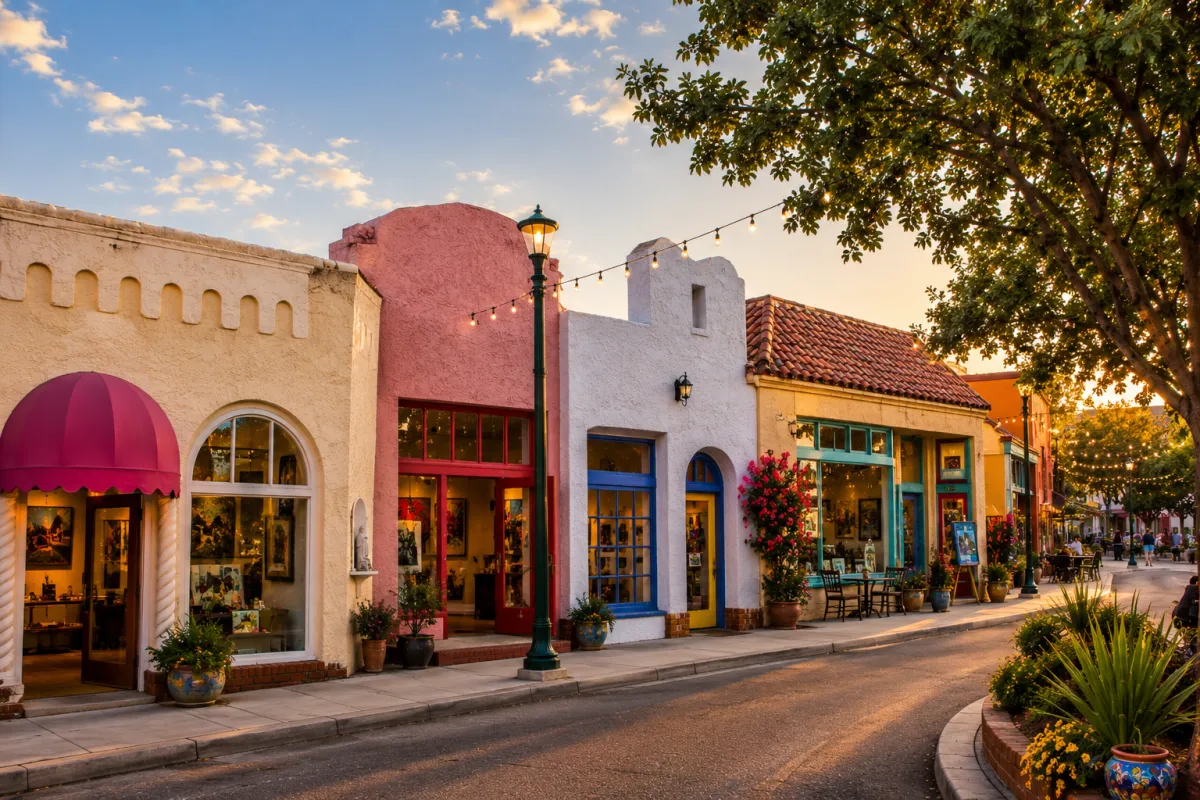
The Paseo Arts District is one of the most visually distinctive neighborhoods in the entire city, built around a curving street of Spanish Revival architecture, colorful stucco buildings with arched entryways, tile work, and iron details that feel genuinely unlike anywhere else in Oklahoma. The architecture dates to the 1920s and was designated for preservation as the art community grew around it, and the result is a neighborhood that looks and feels like a little piece of somewhere else transplanted into the Oklahoma prairie.
The galleries in the Paseo are working studios and exhibition spaces run by actual artists who live and practice here. Monthly art walks draw visitors from across the metro to browse new work, meet artists, and move between spaces over an evening.
The annual Paseo Arts Festival, held in May, draws hundreds of thousands of visitors over three days and is one of the largest and most celebrated arts events in the region.
Beyond galleries, the Paseo has independent coffee shops, casual restaurants, and a walkable residential fringe of bungalows and older homes that have attracted the creative class for decades. It has a slow, unhurried pace that feels intentional, made for wandering rather than rushing.
The Paseo is more residential at its edges than Bricktown. It is a neighborhood for people who want art in their daily life, who want to walk to a gallery opening on a Friday evening, who want their neighborhood to feel like it has a genuine creative identity rather than a curated one.
What real estate looks like here: The Paseo offers some of the most affordable urban housing in OKC, with a median home sale price around $220,000, reflecting genuine value for proximity to the urban core. One-bedroom rentals average around $925. The trade-off is less polish and fewer luxury amenities than newer neighborhoods.
Who this neighborhood is for: Artists, creatives, teachers, musicians, gallery lovers, people who want a neighborhood with soul and character over gloss and uniformity.
Deep Deuce ~ Jazz History and Urban Energy
Deep Deuce, officially the Second Street Corridor just north of Bricktown, carries one of the most important histories in OKC's cultural story. In the early-to-mid 20th century, this neighborhood was the center of African American cultural and commercial life in Oklahoma City, home to jazz clubs, restaurants, barbershops, churches, and a community that produced musicians and artists whose influence extended far beyond Oklahoma.
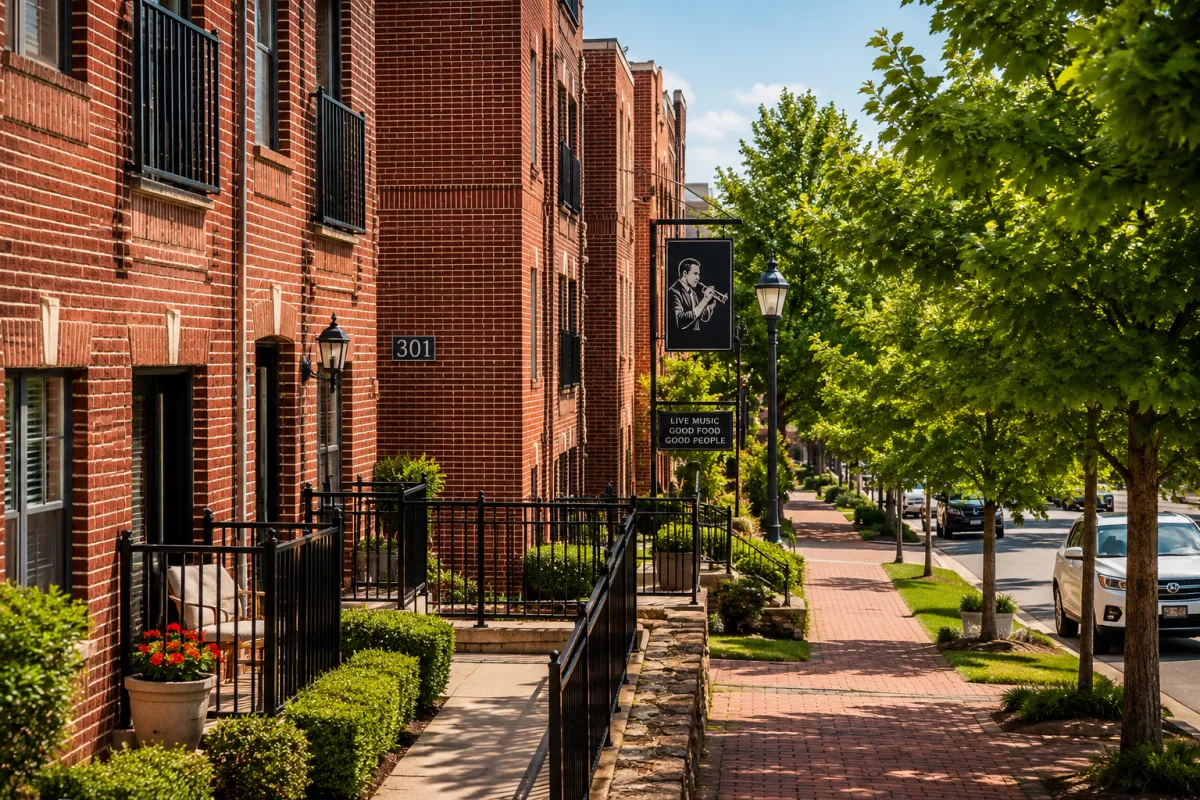
The neighborhood experienced decades of decline following urban renewal policies in the mid-20th century, but has been experiencing a genuine renaissance driven by new development, historic preservation, and proximity to downtown. Today Deep Deuce is a mix of older character with significant new construction, primarily upscale loft apartments and townhouses that have attracted professionals and creatives who want downtown adjacency with a quieter feel than Bricktown itself.
The neighborhood's musical history is honored in several public art installations and in the programming at nearby venues. The Deep Deuce Grill, a neighborhood institution, remains.
What real estate looks like here: Deep Deuce offers a mix of apartment buildings and townhouses, with median sale prices around $648,750. It skews toward rental living. New construction projects continue to arrive.
Who this neighborhood is for: Urban professionals, history-minded buyers, people who want downtown access with a slightly less party-forward atmosphere than Bricktown, design-forward buyers interested in loft living.
The Plaza District — OKC's Independent Spirit
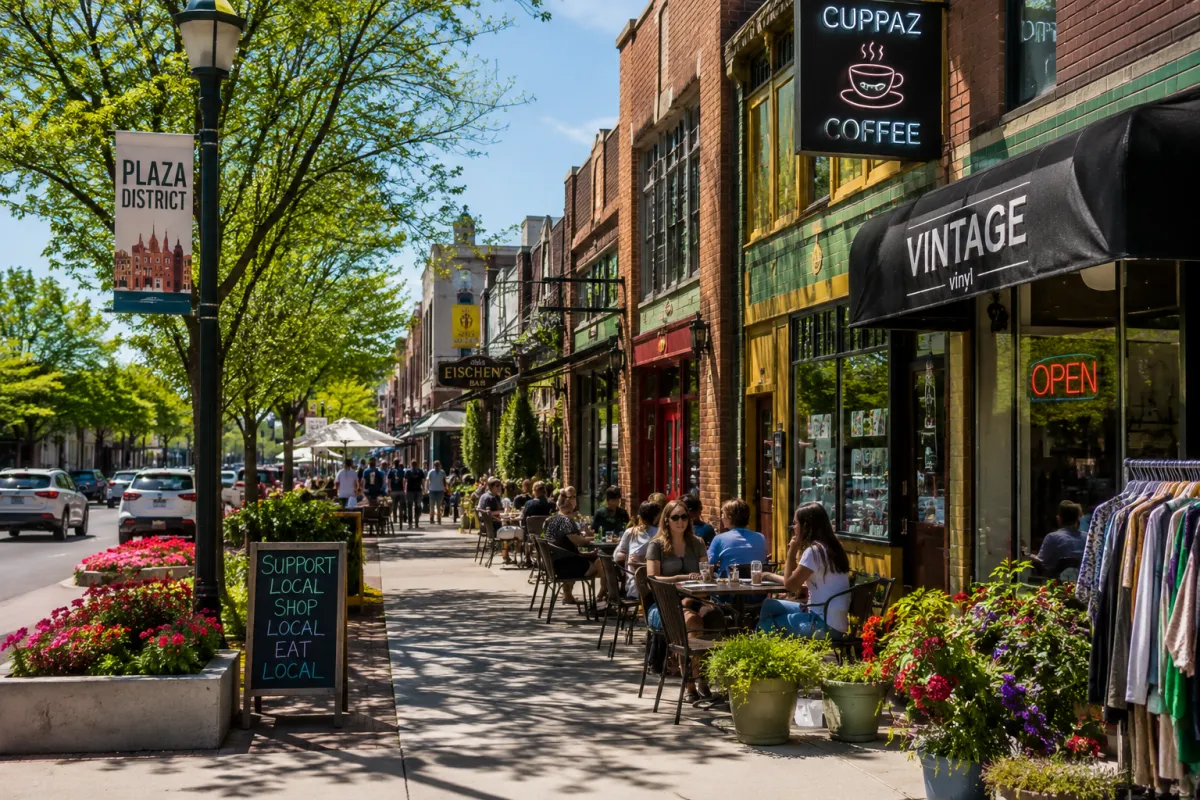
The Plaza District along NW 16th Street has become one of the most beloved neighborhoods in OKC over the past decade, a stretch of independently owned shops, restaurants, coffee houses, and bars that feels like the antidote to the sameness of suburban retail corridors.
What makes the Plaza genuinely special is its commitment to local ownership. Nearly every business here is independently operated. The restaurants and bars are run by people who live in OKC, who chose this neighborhood, who built something personal here. The result is a street experience that rewards regular visits, there is always something new, something changing, something worth discovering.
The food and drink options along the Plaza are consistently strong. Eischen's Bar, one of the oldest bars in Oklahoma. Local coffee roasters. Wine bars. A vinyl record shop. Boutique clothing. A flower market. The Plaza is also home to some of OKC's best brunch options, and on weekend mornings the neighborhood has a relaxed, communal energy that draws people from across the city.
The annual Plaza District Festival in October draws thousands. The neighborhood's monthly events and art nights give it year-round programming that keeps it active.
Who this neighborhood is for: People who shop local by choice, restaurant and nightlife enthusiasts, creative professionals, people relocating from cities like Portland, Austin, or Denver who want an independent-business street culture in OKC.
Stockyards City ~ Where Oklahoma's Western Heritage Lives
If you want to understand the foundation of what Oklahoma City actually is, before the skyline, before the canal, before the modern downtown, spend a few hours in Stockyards City.
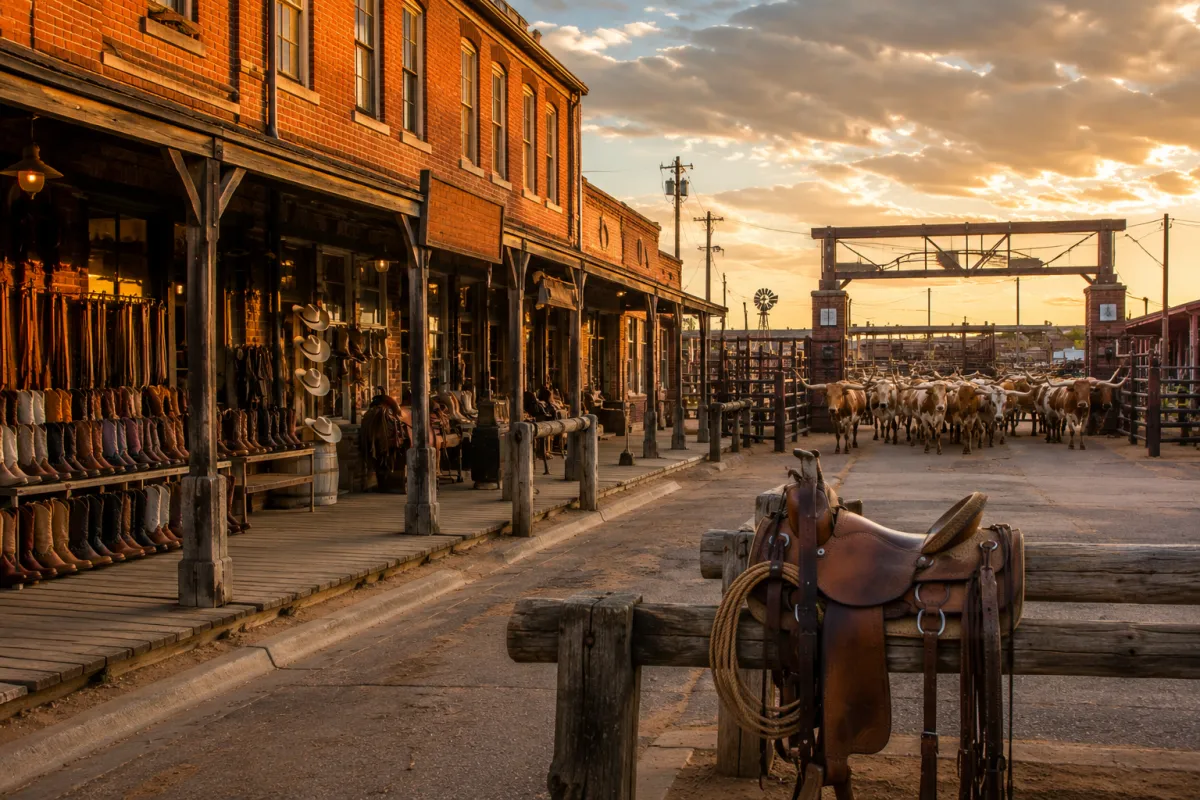
Founded in 1910, Stockyards City was Oklahoma City's first major industrial district, built around the Oklahoma National Stockyards, which for much of the 20th century was one of the largest livestock markets in the world. The stockyards still operate. Live cattle auctions still happen every Monday and Tuesday. You can smell the presence of the working ranch economy the moment you step out of your car.
Around the working stockyards, a district of Western heritage businesses has persisted and thrived: Cattlemen's Steakhouse, one of the most legendary restaurants in the state and a genuine institution since 1910, serving hand-cut steaks in a wood-paneled dining room that has not changed much and does not need to. Custom boot makers and hat shops that have served working cowboys and rodeo royalty for generations. Western wear retailers. Saddle shops. Feed stores.
Stockyards City does not perform its Western identity. It lives it. The people shopping here are often actual ranchers and farmers buying working gear, not tourists buying souvenirs. That authenticity is rarer than it should be and worth seeking out.
The annual Chuck Wagon Gathering and Children's Cowboy Festival is held nearby. The International Finals Rodeo draws competitors and attendees from across the country. For OKC residents, Stockyards City is the place you take visitors when you want to show them something genuinely Oklahoma and it never disappoints.
Who this neighborhood is for: People who love Oklahoma's western heritage, buyers interested in the near-southwest side of the city, restaurant lovers, history enthusiasts, and anyone who wants to eat the best steak in the state.
The Boathouse District ~ Outdoor Recreation on the Oklahoma River
The Oklahoma River corridor on the south side of downtown has been the site of some of the most transformative urban investment in OKC's recent history, turning what was once a neglected stretch of river into a world-class outdoor recreation and cultural destination.
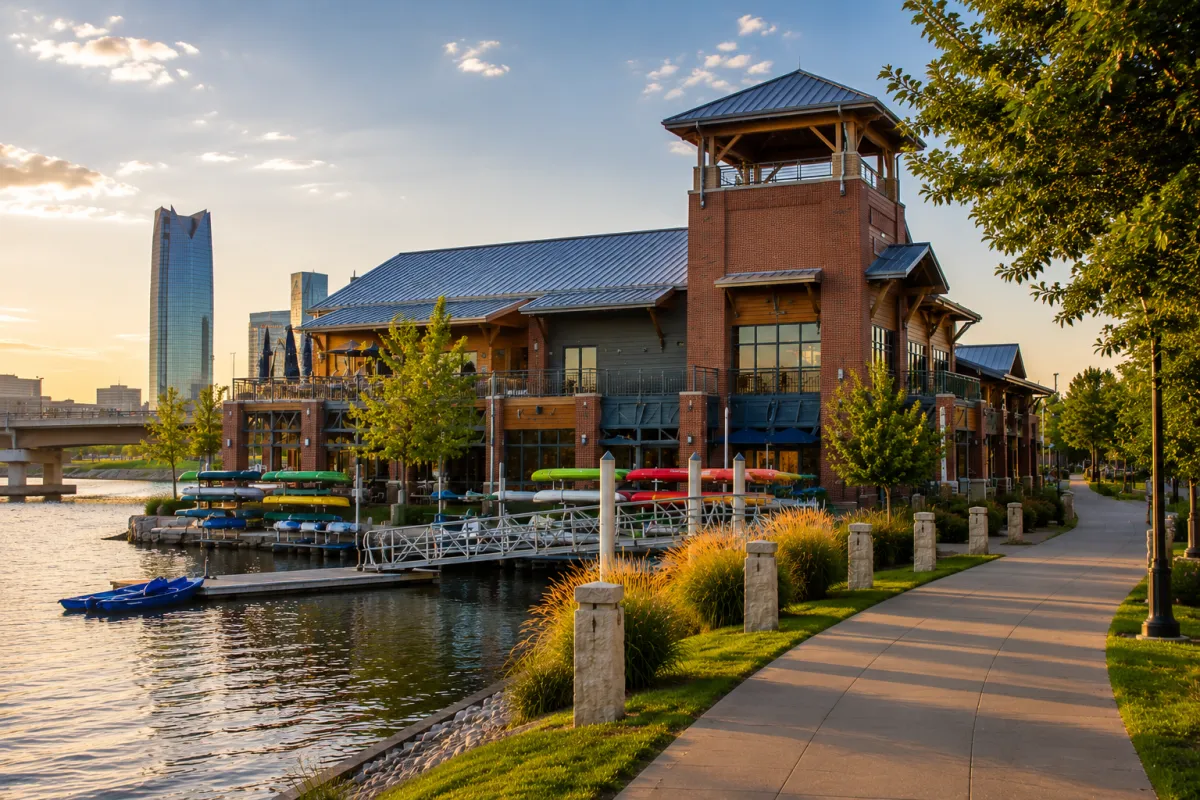
The Boathouse District anchors this transformation. Row houses and boathouse facilities line the river, and the water is used daily by competitive rowers, kayakers, and paddleboarders. The Oklahoma City Rowing Club, the U.S. Olympic rowing and kayak training facilities, and RIVERSPORT OKC all operate here, making this stretch of the Oklahoma River one of the most athletically active urban waterways in the country.
RIVERSPORT itself offers the general public access to whitewater kayaking and rafting on the only Olympic-grade whitewater course west of the Mississippi, zip lines, the SandRidge Sky Trail elevated roped course, stand-up paddleboarding, and recreational kayaking. The facility is accessible and genuinely fun for all age and experience levels.
The First Americans Museum, opened in 2021 along the Horizons District section of the river, represents one of the most important cultural investments in OKC's history. Its architecture, a sweeping crescent form that references the Oklahoma horizon, is visible from the river and has become one of the city's most distinctive landmarks.
The Boathouse District connects to Scissortail Park via the river trail system, and miles of multi-use trails run along the river corridor linking key destinations for cyclists and pedestrians.
Who this area is for: Outdoor enthusiasts, cyclists, rowers, paddlers, buyers who want to be close to active recreation, people who appreciate the combination of cultural destinations and outdoor access in a single corridor.
Nichols Hills and Heritage Hills ~ Established Prestige and Historic Character
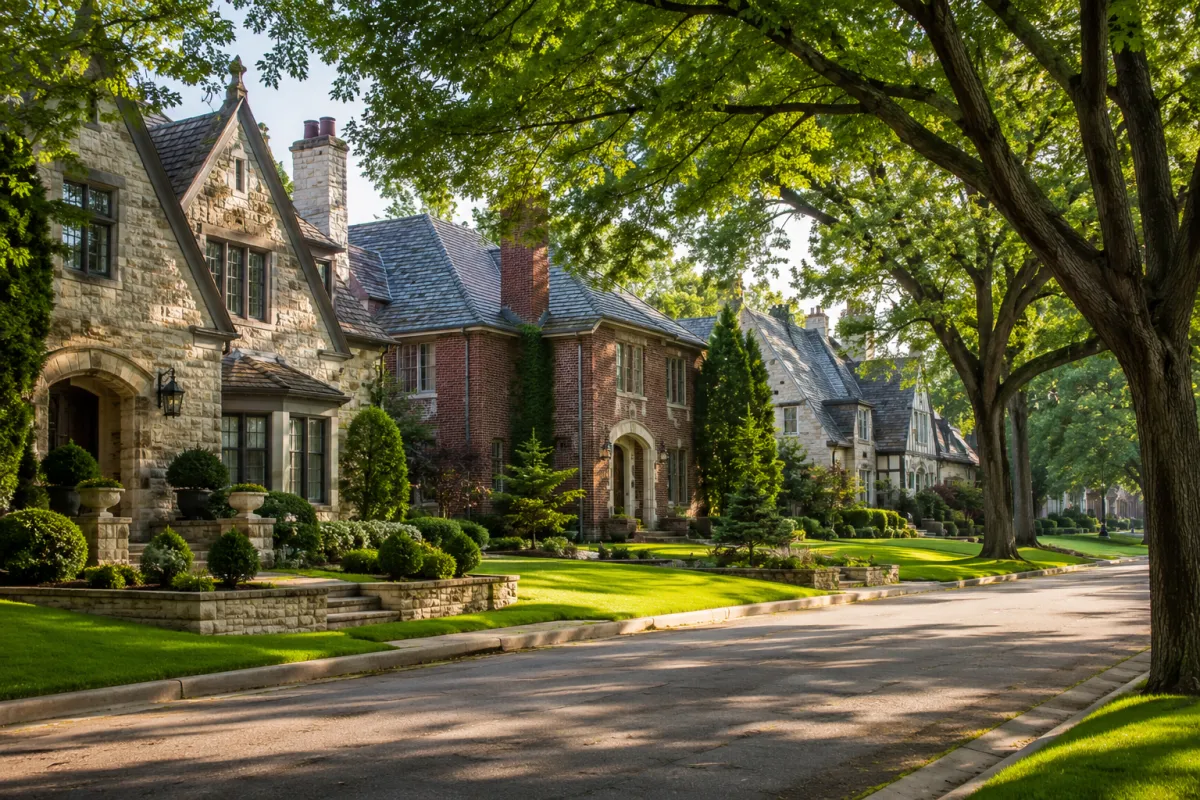
Nichols Hills is an independent municipality entirely surrounded by Oklahoma City, and it is consistently among the most prestigious addresses in the entire OKC metro. Tree-lined streets, architecturally significant homes ranging from Tudor Revival to Mid-Century Modern, and proximity to the Classen Curve retail corridor and Penn Square Mall create an enclave of established luxury that has maintained its desirability for decades.
Nichols Hills has its own city government, its own police department, and a community identity that is distinctly its own. It sits close to major medical facilities, the central business district, and the northwest corridor shopping and dining options. For buyers seeking established luxury, mature trees, lot size, and proximity to everything central OKC offers, Nichols Hills represents the premier option.
Heritage Hills is a historic neighborhood directly north of downtown OKC, listed on the National Register of Historic Places, and home to some of the finest Victorian-era architecture in the state. Mansions, Queen Anne cottages, and Craftsman homes line streets with mature canopy trees that create a setting unlike anything in the newer suburbs. Heritage Hills has a strong neighborhood association and an active preservation culture. Architectural integrity is taken seriously here.
Heritage Hills is for buyers who love historic homes, who want character and craftsmanship that new construction cannot replicate, and who want to be close to the urban core without living in a high-rise.
What real estate looks like: Nichols Hills properties command some of the highest prices in the metro, reflecting the established prestige, lot size, and architectural quality. Heritage Hills offers significant variation, from lovingly restored historic mansions to homes that still need work and represent value for buyers willing to invest.
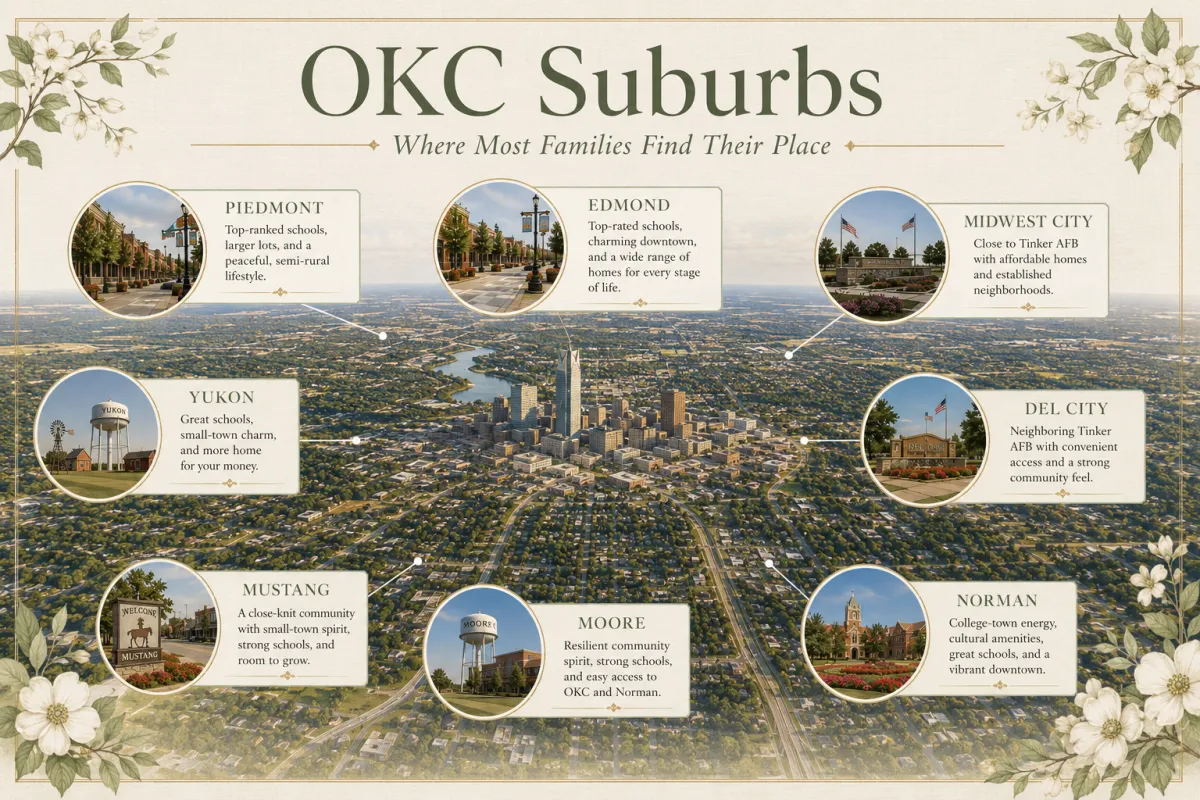
The OKC Suburbs ~ Where Most Families Find Their Place
The majority of families relocating to Oklahoma City ultimately settle in the suburban communities that ring the city's core and for good reason. These suburbs offer the school districts, the new construction, the yard space, the safety, and the family infrastructure that most families prioritize, all within comfortable commuting distance of the city's employment centers.
Edmond sits north of OKC and is the most sought-after suburb in the metro for families prioritizing school quality. It has a genuine downtown of its own along Broadway, with restaurants, boutiques, and coffee shops that give it a community identity beyond just a bedroom community. New construction is ongoing at the metro's northern edge, and the housing stock includes everything from entry-level suburban homes to large custom-built properties on acreage. Edmond Public Schools are among the top-ranked in the state.
Yukon lies west of OKC along I-40 and has grown steadily as a family-friendly community that offers more home for the money than Edmond while maintaining strong schools and a tight community identity. The Chisholm Trail runs through Yukon history, and the town celebrates that heritage annually at Chisholm Trail Days. New development continues along the 150th Street corridor. Yukon is a strong choice for buyers who want suburban quality of life at a more accessible price point.
Mustang is directly south of Yukon and has become one of the fastest-growing communities in the metro. It has a classic small-town feel, a rodeo, a parade, a farmers market, a community that comes together for Friday night football, paired with modern residential development and strong schools. For buyers who want their neighborhood to feel like a genuine community rather than a development, Mustang consistently delivers that feeling.
Moore sits south of OKC between the city and Norman, and carries a community identity built on resilience. The devastating tornadoes of 2013 destroyed parts of Moore, and the community rebuilt with remarkable speed and spirit. Moore Public Schools, the third-largest district in the state, has invested significantly in new tech facilities. The city offers strong family infrastructure, good access to both OKC and Norman, and a housing market that tends to be more accessible than the northern suburbs.
Piedmont to the northwest has quietly become one of the more desirable addresses in the metro for buyers who want suburban living with a semi-rural feel, larger lots, more breathing room, and a school district that has consistently ranked in the top ten statewide. It is slightly farther from the urban core, but that distance is part of its appeal for many buyers. Piedmont offers newer construction alongside older properties and some acreage options as you move further northwest.
Norman, while technically a separate city anchored by the University of Oklahoma, functions as the southern anchor of the OKC metro and draws buyers who want a college-town atmosphere, strong schools, and cultural amenities. Norman has a lively downtown restaurant and arts scene, a highly regarded public school system, and a housing market with significant diversity across price points.
Midwest City and Del City sit east of OKC adjacent to Tinker Air Force Base and serve as natural communities for military and defense contractor personnel. They offer affordable housing, community infrastructure, and proximity to the base that makes daily life logistically straightforward for families connected to Tinker.
Rural Living Within Reach of Oklahoma City
One of the most frequently underestimated aspects of the OKC metro is how accessible rural and acreage living is for people who want the city's amenities without giving up space, land, privacy, and the freedom to live life on their own terms.
Within thirty to forty-five minutes of downtown Oklahoma City, you will find communities where five, ten, twenty, and even forty-plus acres are available at prices that remain competitive, where horses are common, where workshops and barns are expected, and where neighbors are respectful of space.
Spencer sits just east of OKC and carries a genuine rural Oklahoma character with Route 66 roots and working-class independence. It offers acreage properties at accessible price points for buyers who want country living close to the city. (You can visit my dedicated Spencer page for a full guide to this community.)
Arcadia along Route 66 is one of the most charming small communities in the metro, historic, artsy, with iconic landmarks like POPS and the Round Barn, and quiet acreage available just minutes from the urban edge. (Visit my Arcadia guide for the full picture.)
Luther, Harrah, Choctaw, and Jones offer rural properties, often with meaningful land, within forty-five minutes of downtown. These communities attract buyers who want to homestead, raise livestock, grow gardens, keep chickens, run an at-home business, or simply have enough property that the next-door neighbor is not in earshot.
Tuttle, Blanchard, and Chickasha to the southwest offer access to open prairie land, strong wind (relevant for anyone considering wind power), and the quiet that only distance from the city can provide, while remaining within a reasonable drive of OKC employment.
For buyers who want acreage, these communities are where I spend much of my time. The considerations for buying rural land, water wells, septic systems, agricultural exemptions, road access, soil quality, workshop space, zoning, are genuinely different from suburban home buying, and they require a real estate professional who understands them.
That is where I come in.
Finding Your Place in Oklahoma City
After walking through all of these communities, the question becomes: where do you actually belong?
Here is how I think about it when I sit down with buyers who are new to this metro.
If you want walkability, urban energy, and the ability to walk out your front door into restaurants, music, and city life, start your search in Midtown, the Plaza District, Bricktown, Automobile Alley, or the Paseo.
If you are a family with children where school district quality is the primary driver, Edmond, Yukon, Mustang, Moore, and Piedmont should be your focus areas, each with meaningfully different price points and community personalities.
If you want established prestige, architectural history, and proximity to central OKC, Nichols Hills and Heritage Hills represent the best of what long-established OKC neighborhoods offer.
If you want land, privacy, a workshop, a garden, horses, or simply the freedom to live without HOA restrictions and close neighbors, the rural communities surrounding the metro: Spencer, Luther, Harrah, Piedmont, Arcadia, Choctaw, Tuttle, and beyond, are where your search begins.
If you work at Tinker Air Force Base or in aerospace and defense, Midwest City and Del City offer the most logical commute and a community built around that workforce.
If you are a creative, an artist, a musician, or someone who just wants their daily life to have a little more soul and independence, the Paseo, the Plaza District, and Midtown are where you will feel at home.
No matter where you land, I am here to help you understand what that area actually feels like to live in, what the real estate market is doing, and what considerations you need to understand before you make one of the most important decisions of your life.
This metro surprised me when I came here. It still surprises me.
I would love to help it surprise you too.
Is OKC, Oklahoma a good place to raise a family?
It consistently ranks as one of the most livable large cities in America, and the data backs that up. Oklahoma City holds the number one spot for affordability among every U.S. city with a population over 500,000, according to the Council for Community and Economic Research's 2025 Cost of Living Index. Its composite score of 81.2 puts everyday household costs nearly 19 percent below the national average. Beyond the numbers, OKC is a city with a genuine downtown, a growing food scene with James Beard-recognized restaurants, a championship NBA team, professional sports, parks, museums, major universities, and suburban communities that routinely appear on national best-places-to-live lists. The short answer: yes. It is a genuinely good place to live, and most people who move here say they wish they had come sooner.
What is the cost of living like in Oklahoma City compared to other cities?
Oklahoma City is the most affordable large city in the United States, offering the lowest cost of living of any metro area with more than 500,000 people. By comparison, San Francisco's cost of living index of 160.1 is nearly double Oklahoma City's score of 81.5. OKC's individual cost categories tell the story clearly: housing index of 59.2 (meaning housing costs more than 40 percent below the national average), transportation at 88.5, healthcare at 95.3, and groceries at 93.5, all below national norms.
For someone moving from California, New York, Colorado, or Texas, the difference is not subtle. It means buying a house instead of renting indefinitely. It means building savings on the same salary. It means choosing your job based on what you want to do rather than what pays the most.
What is the average home price in Oklahoma City?
The typical home listing price in Oklahoma City is around $320,395, while rents average $1,061 per month. For context, the national median home sale price sits around $428,000, while the average rent nationally runs approximately $1,645 per month, meaning OKC buyers and renters save significantly on housing compared to the national average.
Prices vary considerably by location. Urban neighborhoods near downtown and Bricktown carry higher price points for condos and loft conversions. Suburban communities like Edmond, Yukon, and Mustang offer strong new construction across a wide price range. Rural and acreage properties on the city's outer ring represent some of the best land value in the region. Wherever your budget sits, there is a market in this metro that fits it.
What is tornado season like in Oklahoma City? Do I need a storm shelter?
This is one of the most important questions anyone moving to OKC should ask, and I want to give you a completely honest answer.
Oklahoma is located in the heart of Tornado Alley, making it one of the most tornado-prone areas in the world. Tornado season primarily runs from March through June, with the most intense activity in April and May. Oklahoma City has 182 outdoor warning sirens citywide. When the National Weather Service issues a tornado warning, the city activates sirens in the affected sectors. Warnings typically give residents 10 to 15 minutes to act.
The City of Oklahoma City does not have public tornado shelters. OKC officials discourage public shelters because of the risk of driving during storms, you could drive directly into the path of a tornado. The safest place to be is a storm shelter built to FEMA guidelines and ICC 500 standards or a basement. If there is no storm shelter, get to the innermost room, hallway, or closet on the lowest level of the building.
Here is the practical reality for buyers: most established Oklahoma homes in the suburbs either have a storm shelter or have a garage slab that can accept one. Above-ground safe rooms and in-garage underground shelters are extremely common here, widely available, and a standard part of responsible Oklahoma homeownership. When I help buyers evaluate properties, storm shelter access is always part of that conversation.
The weather here is real and it deserves respect. Oklahomans take severe weather seriously, every household has a plan, most have a weather radio or the local weather apps installed, and the local TV meteorologists (genuinely excellent in OKC) provide some of the best severe weather coverage in the country. Once you have lived here through a season, the preparation becomes second nature. It does not define daily life. It is simply part of living in this part of the world.
What do I need to know about Oklahoma City before I move here?
A few things that matter and that most relocation guides leave out:
You will need a car. Traffic is manageable and commutes are short, but the metro is spread out and car ownership is essential outside the urban core.
The friendliness is not an act. OKC earned its nickname "The Big Friendly" for a reason. People here are genuinely warm, and you will feel it quickly after arriving.
The city is bigger and more varied than it looks on a map. Do not judge it by one drive through. Spend time in Midtown, the Plaza District, the Paseo, the Boathouse District, Stockyards City, and the suburban communities before forming a full opinion.
Finally, if you are considering buying property here, whether in the city, the suburbs, or on acreage outside the metro, I want to help you do it right. This is a market I know deeply and love genuinely. Reach out and let's start the conversation.
The Spirit Behind Oklahoma City
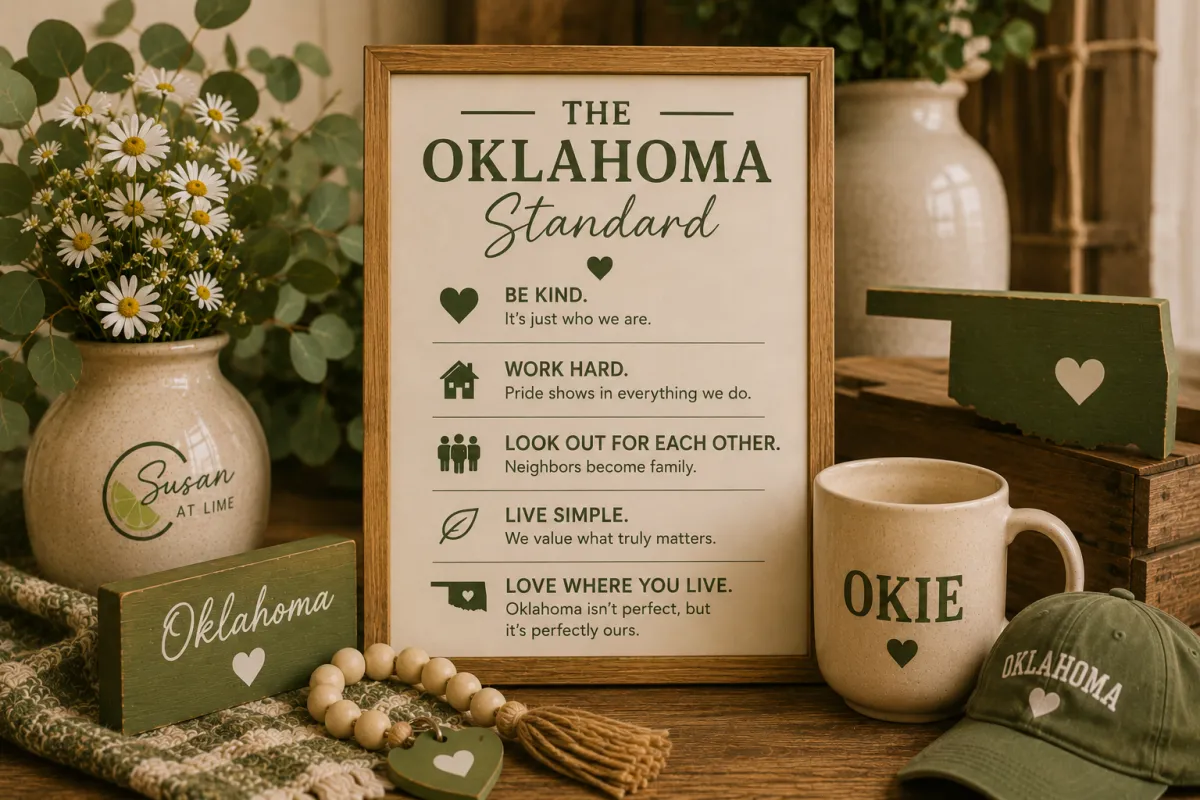
Every city has a personality. OKC's is earned.
This is a city that was shaped by hardship in ways that most cities have not experienced. The 1889 Land Run defined the state's beginning, a chaotic, remarkable explosion of human ambition on a single April morning.
The Dust Bowl tested the resolve of generations.
The 1995 bombing of the Murrah Federal Building shook the city and the country to its core.
Each time, Oklahoma City got back up. Rebuilt. Became stronger than it was before.
That history is not background noise in OKC. It is active. The people who live here carry it, not as a burden, but as context. As a reason to work hard.
As an understanding that community is not abstract. It is what happens when your neighbor needs help after a tornado. It is what happens when a city decides to invest in itself over twenty years of sustained, disciplined civic effort. It is what happens when a basketball franchise builds something real instead of buying it, and the whole city feels the difference.
Oklahoma City is proud without being arrogant. It is ambitious without being exhausting. It is big enough to offer everything a city should offer, and grounded enough to still feel like a place where people actually know each other.
It has wide open skies and a downtown that gets better every year. It has rodeos and James Beard restaurants within miles of each other. It has Olympic athletes training on its riverfront and families fishing at its lake on the same Saturday afternoon.
When people ask me why I love this place, I struggle to pick just one thing.
It is all of it together.
If you are thinking about making Oklahoma City home, I would love to be the person who helps you find your place in it.

Historical OKC
The History of Oklahoma City
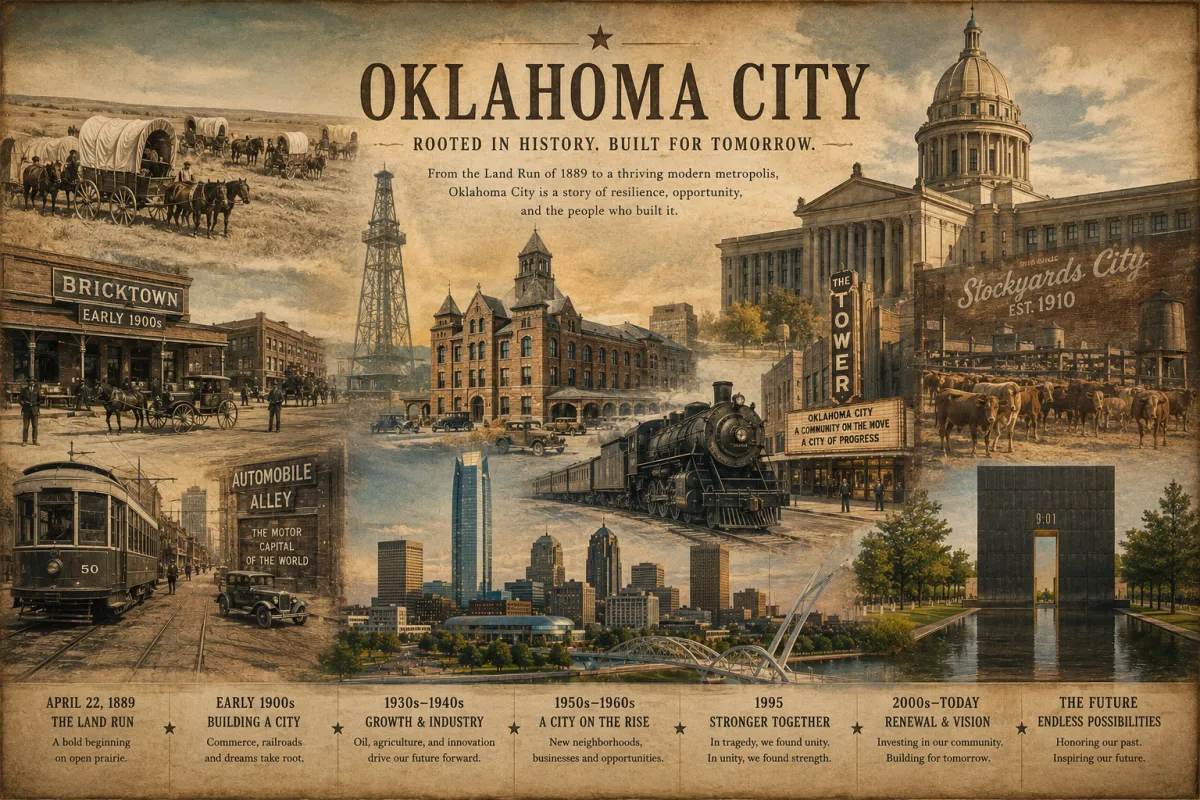
Oklahoma City's story begins with one of the most remarkable events in American history. On April 22, 1889, thousands of settlers gathered at the edge of what was known as the Unassigned Lands, waiting for the signal that would begin the historic Land Run. Within hours, a tent city emerged where Oklahoma City stands today.
What began as open prairie quickly transformed into a thriving community built by people willing to take risks and create something new.
Over the following decades, Oklahoma City grew into an important transportation, agriculture, and energy hub. Railroads connected the city to the rest of the country, businesses flourished, and the discovery of oil helped fuel economic growth throughout the region.
Historic districts such as Bricktown, Automobile Alley, and Stockyards City still reflect pieces of this early history and continue to play an important role in the city's identity today.
Like many great cities, Oklahoma City has faced challenges. The city experienced economic booms and downturns, periods of rapid growth, and moments that tested the community's strength.
Perhaps no event shaped modern Oklahoma City more than the April 19, 1995 bombing of the Alfred P. Murrah Federal Building. The tragedy claimed 168 lives and forever changed the city. Yet from that heartbreaking day emerged a spirit of resilience, compassion, and unity that continues to define Oklahoma City.
In the decades that followed, residents invested in the future through projects that transformed downtown, improved parks, expanded entertainment districts, revitalized neighborhoods, and created new opportunities for families and businesses. Initiatives like MAPS helped reshape Oklahoma City into one of the fastest-growing and most talked-about cities in the Midwest.
Today, Oklahoma City is a blend of old and new. Historic brick buildings stand alongside modern skyscrapers. Century-old businesses share streets with innovative startups. The city honors its past while continuing to invest in its future.
From the Land Run of 1889 to hosting Olympic events in 2028, Oklahoma City's story has always been one of perseverance, growth, and possibility.
For many people moving here, that history is part of what makes Oklahoma City special. It is a city that remembers where it came from, takes pride in what it has become, and continues to build for generations still to come.
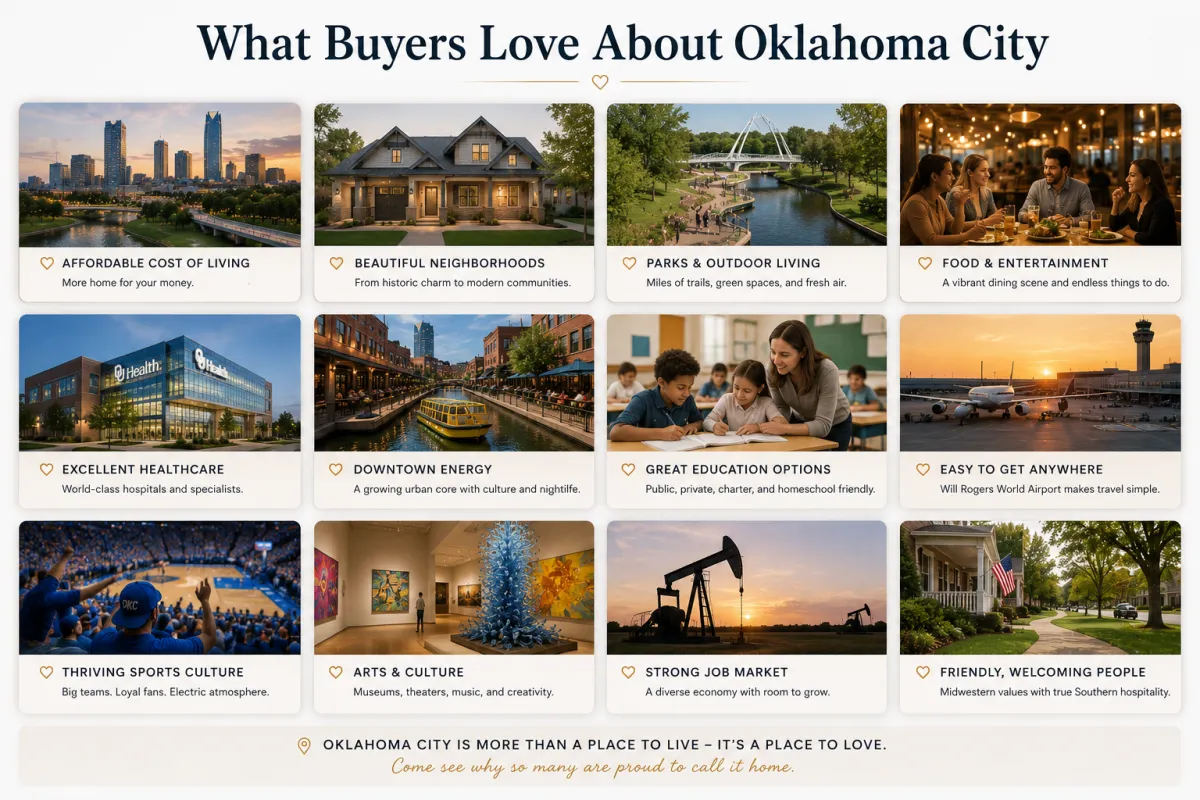
Helpful Resources for Buyers Moving to OKC
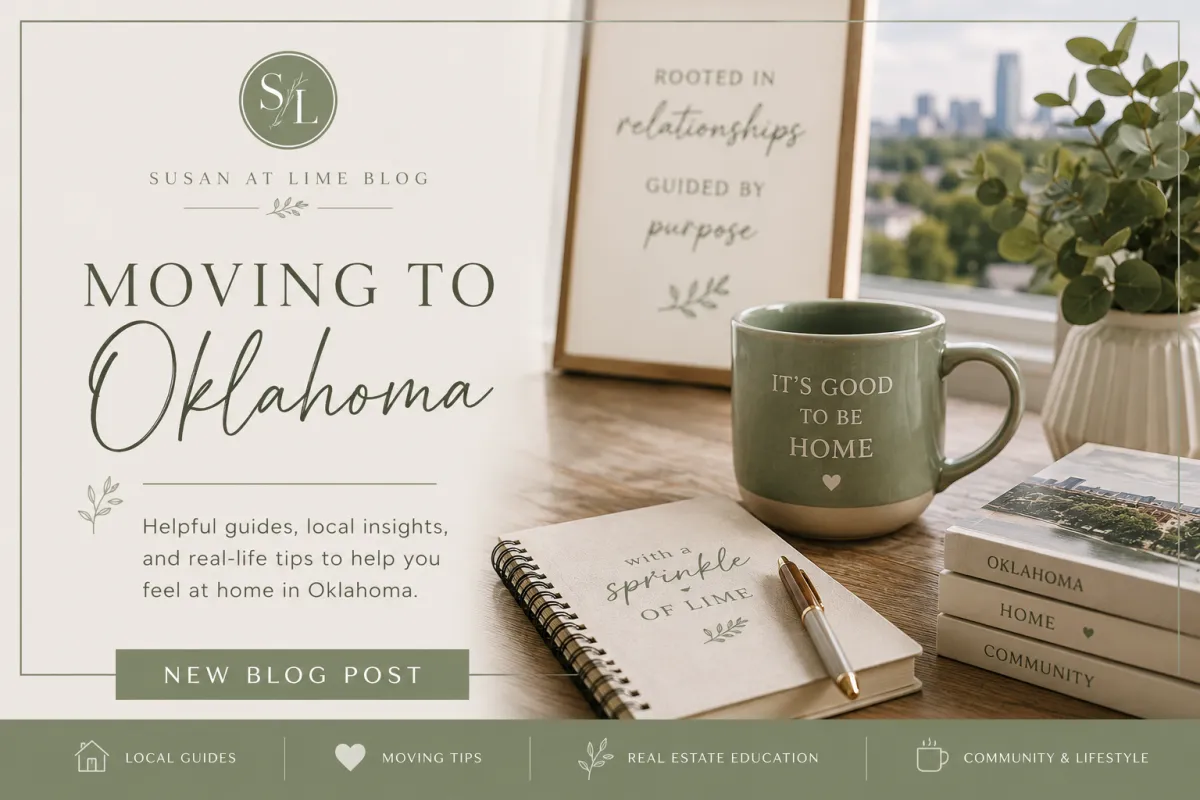
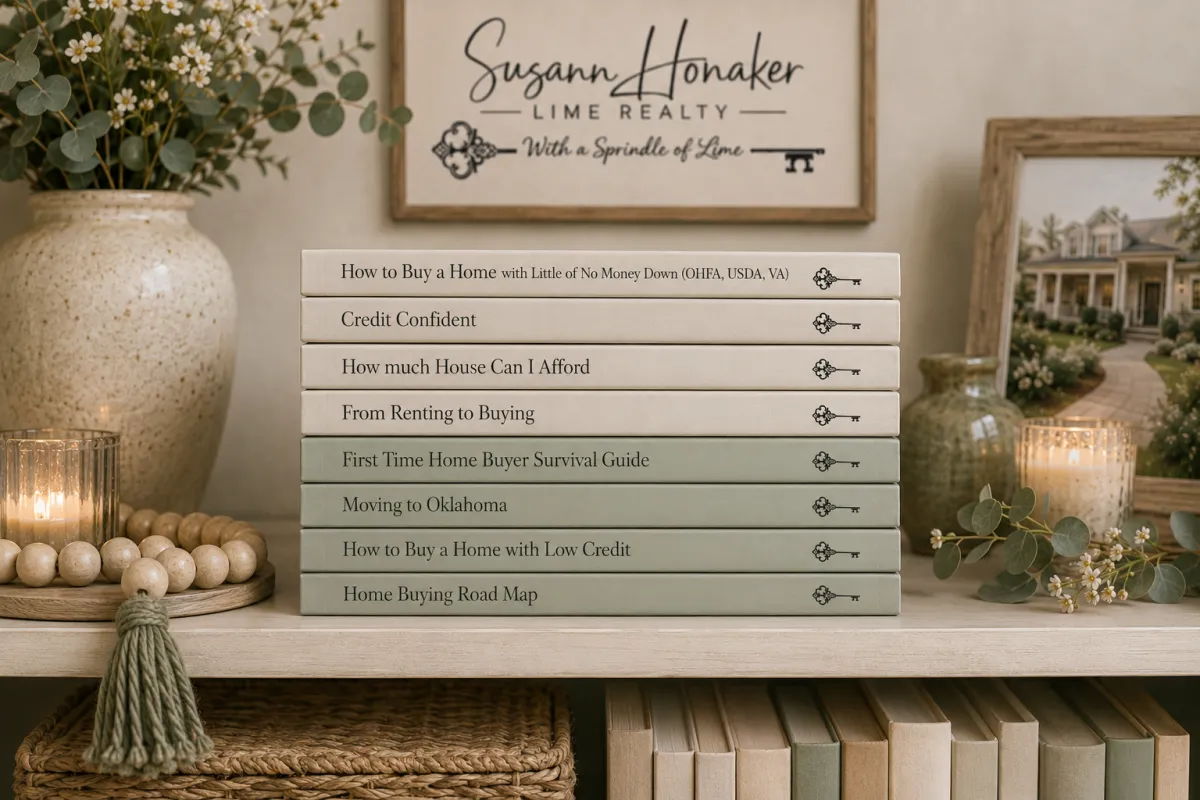
Get Your Free Guide Books
Welcome, I am honored to have you here today.
Buying a home comes with a lot of emotions, questions, and moving pieces, especially if this is your first time navigating the process.
These Buyer Guides were thoughtfully created to help you feel more informed, supported, and confident every step of the way. Whether you're trying to understand financing, improve your credit, explore down payment assistance options, or simply figure out where to begin, each guide is designed to break things down in a calm and approachable way.
Real estate should never feel overwhelming or intimidating. My goal is to create a buying experience where you feel heard, educated, and genuinely cared for throughout the journey.
These resources are here to answer common questions, ease some of the uncertainty, and help you move forward feeling prepared, because finding a home is about more than a transaction. It’s about building a life that feels safe, exciting, and truly yours.
When I say “With a Sprinkle of Lime” it means adding a little extra care into every step of the experience. A little more guidance. A little more honesty. A little more support. A little more heart. Buying a home is one of life’s biggest milestones, and you deserve someone who not only helps you navigate the process, but helps you feel at home along the way.
With a Sprinkle of Lime, thoughtfully guiding you home.

Why I Love Helping Families in OKC
Why I Love Helping People Find Homes in Oklahoma City
As a Realtor®, I get the opportunity to help people find houses, but what I really love is helping people find where they belong.
Oklahoma City is one of those rare places that surprises people. Many arrive expecting one thing and leave wondering why they didn't move sooner.
They discover neighborhoods filled with character, parks full of families, local restaurants they quickly become regulars at, and communities where neighbors still wave as they drive by.
What I love most about helping people move to Oklahoma City is watching that moment when a client realizes they are not just buying a property, they are finding their place. Sometimes it is a young family discovering a neighborhood where their children can grow up. Sometimes it is a retiree looking for a slower pace and lower cost of living. Sometimes it is someone relocating across the country who simply wants a fresh start.
As a mom, community volunteer, and longtime Oklahoma resident, I understand that a home is about much more than square footage. It is where birthdays are celebrated, holiday traditions are created, children grow, friendships form, and memories are made. Those moments matter.
Oklahoma City offers something special. It has the opportunities of a growing city while still holding onto the values that make people feel connected. From Thunder game nights and community festivals to quiet evenings on the porch and weekend trips to local parks, there is a sense of belonging here that many people are searching for.
Helping people discover that for themselves is one of the most rewarding parts of what I do. Whether you are moving across town or across the country, I believe finding the right home starts with understanding the life you want to build there.
That is why I love helping people call Oklahoma City home.

Let’s Explore OKC Together
Whether you're just beginning to explore the area or actively preparing to buy, I’d love the opportunity to help guide you through the process and answer any questions you may have along the way.
What Lime Realty Values
Lime Realty is a locally rooted Oklahoma brokerage built around education, relationships, and community.
One of the things that makes Lime Realty different is the heart behind how we serve people. Rather than focusing on high-pressure sales, the goal is to help clients feel informed, supported, and confident throughout every stage of the real estate process.
Whether someone is buying their very first home, relocating to Oklahoma, upgrading into a larger property, downsizing, or preparing to sell, the focus is always on creating a personalized experience that puts people first.
At Lime Realty, relationships matter.
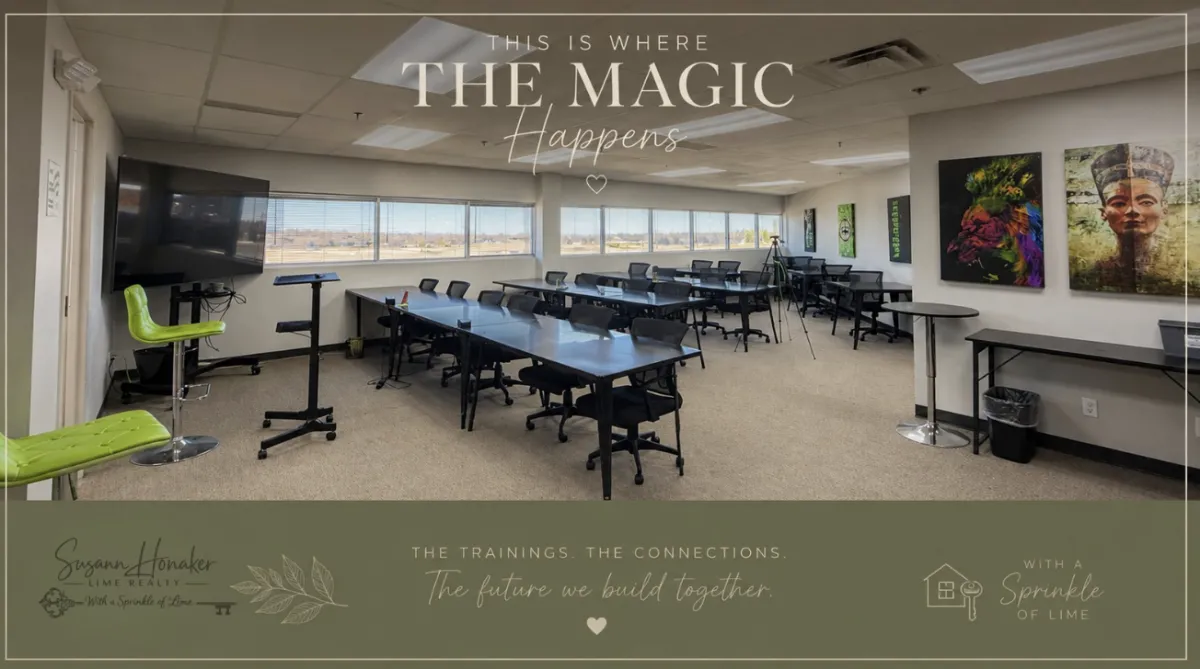
At Lime Realty, relationships matter.
The brokerage was built around the belief that real estate should feel:
approachable,
educational,
community-centered,
and genuinely supportive.
That philosophy is one of the reasons I chose to partner with Lime Realty.
As an agent, I’m able to combine local market knowledge with a relationship-first approach that allows me to truly walk alongside clients through the process, not simply help them complete a transaction.
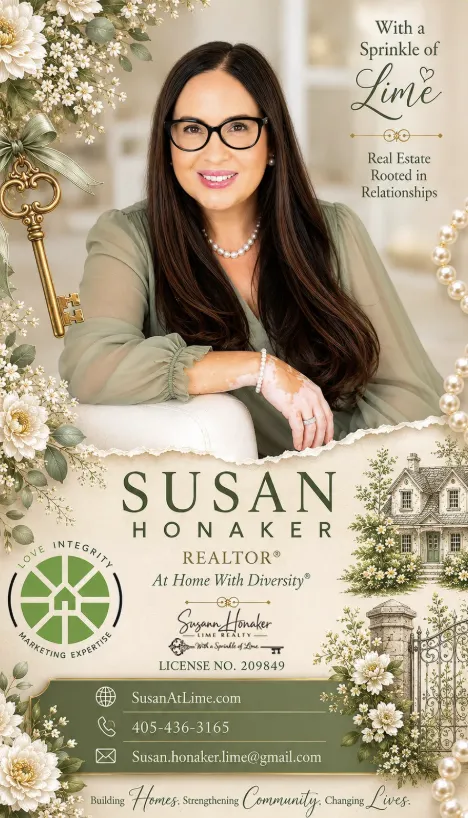
At the heart of everything I do is a simple belief: you deserve someone who treats this process as seriously as you do. As a REALTOR® with Lime Realty, I operate under a professional code that puts your interests first, always. That isn't just a requirement. It's genuinely how I approach every client relationship.
Home Buying Assistance Programs in Oklahoma
Some of the programs available to Oklahoma buyers include:
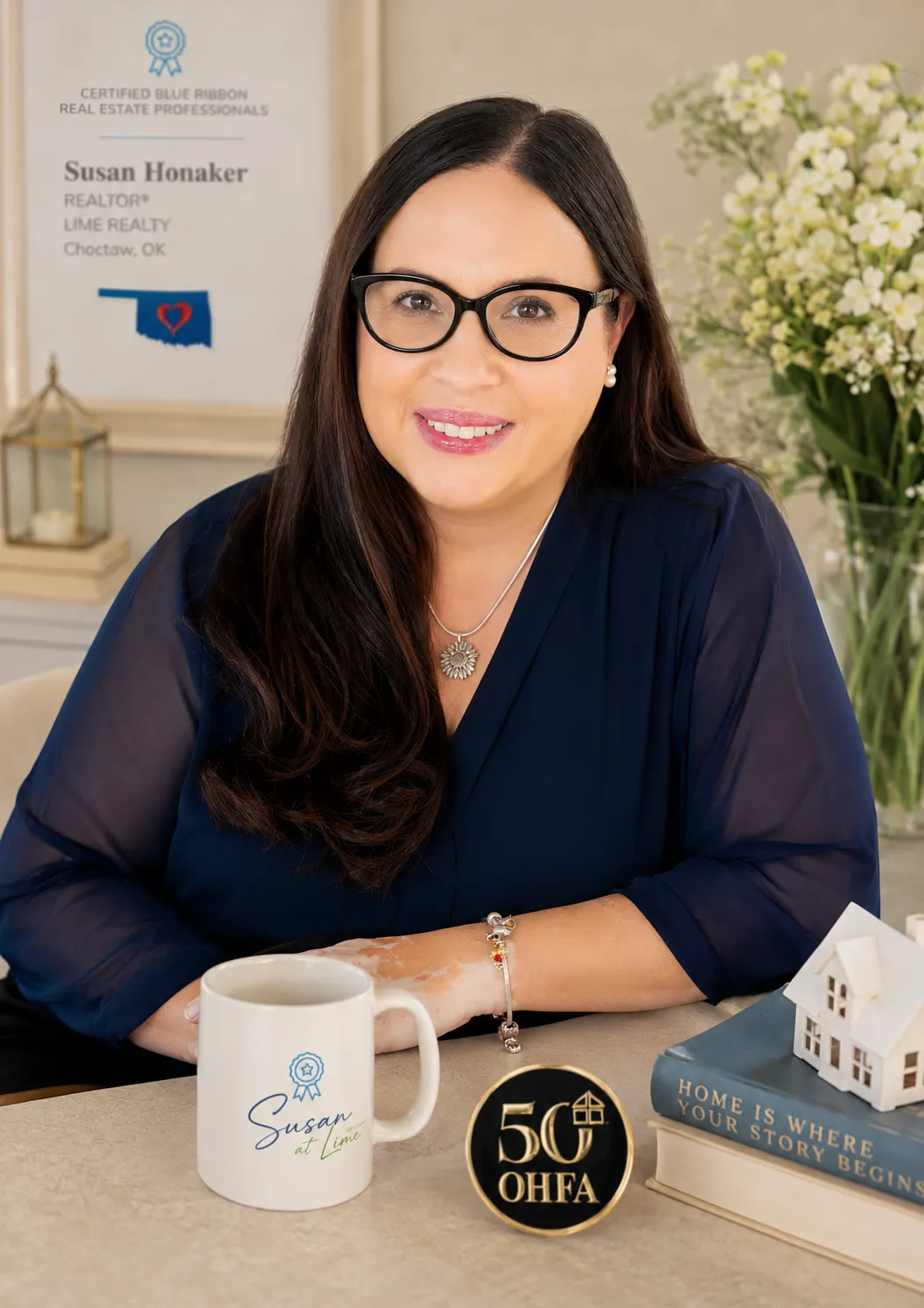
Oklahoma OHFA Blue Ribbon Real Estate Agent
• Down payment assistance programs
• Special home loan programs for teachers, first responders, and public service workers
• 0% down loan programs in eligible rural areas
• Tribal housing grants
• VA Loans
• City and nonprofit homebuyer assistance programs
• Federal programs that provide significant home discounts for community heroes
Each program has its own guidelines, and sometimes they can even be combined together to maximize your benefits.
Below you'll find several programs that Oklahoma buyers may qualify for. This is not a complete list, but it highlights some of the most helpful resources available today.
If you have questions about any of these programs, or if you would like help determining which options may fit your situation, I’m always happy to help.
Buying a home isn't just about a transaction.
It’s about opening the door to stability, opportunity, and a place to call your own.
How Homebuyer Programs Can Work Together
One of the things many buyers don’t realize is that some homebuyer assistance programs can be combined together. This is often called “stacking programs.”
Instead of relying on just one source of help, it may be possible to use multiple programs at the same time to significantly reduce the amount of money you need to bring to closing.
For example, a buyer might be able to combine:
• A 0% down loan program like USDA or VA
• State down payment assistance through Oklahoma Housing Finance Agency programs
• A city or nonprofit grant for closing costs
• A tribal housing grant if eligible
• Special programs for teachers, first responders, or public service workers
When these programs work together, they can dramatically lower the upfront costs of buying a home. In some cases, buyers are able to purchase with very little money out of pocket.
Every program has its own guidelines, income limits, and eligibility requirements, which is why understanding how they fit together is so important.
That’s where experience matters.
Part of my job is helping you explore the options that may be available to you and connecting you with lenders who understand how to structure these programs correctly.
Sometimes the right combination of programs can mean the difference between waiting years to buy a home and becoming a homeowner much sooner than you expected.
The goal isn’t just to buy a house.
It’s to create a path to homeownership that works for you.
Advice For Buyers

© 2026 Susan Honaker | Susan at Lime | Lime Realty. All Rights Reserved.
5909 Northwest Expy #A200, Oklahoma City, OK 73132
⚖️ Disclaimer:
The information provided on this website is for general informational and marketing purposes only and should not be considered legal, financial, tax, construction, investment, or real estate advice. Information about communities, schools, neighborhoods, property conditions, local culture, lifestyle, and market trends is based on personal opinion, public information, and general observations that may change over time.
While every effort is made to provide accurate and updated information, Susan Honaker | Susan at Lime Realty makes no guarantees regarding completeness, accuracy, school boundaries, zoning, ordinances, property use restrictions, or future market conditions. Buyers and sellers are encouraged to independently verify all information important to their purchasing decisions.
Descriptions of cities and communities throughout this website are intended to reflect general atmosphere, lifestyle, and local character and should not be interpreted as guarantees or representations of any individual experience.
Equal Housing Opportunity. Susan Honaker and Lime Realty proudly serve clients of all backgrounds in accordance with all federal, state, and local Fair Housing laws.
Property availability, pricing, and market conditions are subject to change without notice.
Susan Honaker | Susan at Lime Realty
Oklahoma REALTOR®
With a Sprinkle of Lime, thoughtfully guiding you home.
Facebook
Instagram
LinkedIn
Youtube
TikTok
Pinterest
Google Plus
Mail